Archive for the ‘Perennial’ Category

Shrubby Penstemon - Penstemon fruticosus var. scouleri - low clumps of large, light purple blooms are locally abundant throughout the Cariboo-Chilcotin on rocky cliffs and steep, gravelly, roadside cutbanks in mid-spring. This photo was taken near Soda Creek, B.C., May 23, 2010.

Shrubby Penstemon – Penstemon fruticosus var. scouleri – low, woody, fine-leaved foliage clumps covered with large, tubular, light purple blooms are locally abundant throughout the Cariboo-Chilcotin on rocky cliffs and steep, gravelly, roadside cutbanks in mid-spring. This photo was taken near Soda Creek, B.C., May 23, 2010. Image: HFN

Perennial. Zone 1/2. Scrophulariacea. North America; in Canada throughout the southern third of B.C. east of the Cascades and west to the Rockies, and in the United States common in Washington, Oregon, Idaho, Montana and Wyoming. A.k.a. Shrubby Beardtongue, Scouler’s Penstemon.

In bloom from May until July, depending on elevation, this floriferous sub-shrub is unmistakeable when seen on the roadside. It favours steep rock bluffs, gravel pits and roadsides, flourishing best in well-drained, rocky/sandy soil. Its pale purple blooms range in shade of warm violet to cool mauve, with occasional (very rare) white sports.

Here is what Lewis J. Clark had to say in his 1972 Wild Flowers of British Columbia:

This subshrubby species is described by its name, fruticosus meaning shrub-like. It is a variable species, but in all its forms is very beautiful. Choice forms are easily obtained for the garden by taking short cuttings, which root very readily in sand…To keep the plants attractively compact and floriferous, they should be given gritty soil with very little food.

The plants are semi-evergreen, a proportion of the leaves usually turning reddish in the fall, and later dropping. Commonly the compact framework of branches is 6-12 inches tall. Leaves are generally without hairs, up to 2 inches long, but usually shorter…narrow, almost elliptic and obscurely toothed. Flowers are relatively large (up to 2 inches long), generally blue-lavender, but so highly variable that the gardener should always be on the alert for exceptionally good colour forms. White, and beautiful pink specimens are seen occasionally…


This close-up of Penstemon fruticosus var. scouleri found growing in generous abundance on the gravel roadsides opposite the huge open-pit Highland Valley Copper Mine east of Ashcroft, B.C. shows the reason for the common name of this genus - 'Beardtongue'. Lewis J. Clark: "The lower luip of the corolla is ornamented with two deep folds and with long white hairs. When the corolla is slit lengthwise, the anthers (and also the filament of the half-length infertile stamen) are seen to be densely white haired."

This close-up of one of the  Penstemon fruticosus var. scouleri clumps found growing in generous abundance on the gravel roadsides opposite the huge open-pit Highland Valley Copper Mine east of Ashcroft, B.C. shows the reason for the common name of this genus – ‘Beardtongue’. Lewis J. Clark: “The lower lip of the corolla is ornamented with two deep folds and with long white hairs. When the corolla is slit lengthwise, the anthers (and also the filament of the half-length infertile stamen) are seen to be densely white haired.” (Click on the image to open an enlargement, which will show the afore-mentioned long white hairs on the lip folds.) Image: HFN

According to Plants of Southern Interior British Columbia (Parish, Coupé, Lloyd – Lone Pine Publishing – 1996), traditional First Nations’ uses of this plant included the production of a dye to colour basket-making materials, in pit cooking to flavour root vegetables, and medicinally as a purgative, and to bathe sore eyes and sooth ulcers, wounds, and arthritic joints.

Though in general removing plants from the wild to the garden is frowned upon, in the case of this penstemon all of my guidebooks mention how easy it is to establish from stem cuttings rooted in grit or sand, and as this technique will not harm the parent plant, one may in good conscience give it a try. Seeds are abundantly produced in pointed capsules, but are difficult to germinate, so might not be the best way to obtain this lovely species.

This is definitely a plant for a specialized location, requiring full sun and extremely well-drained soil to thrive, as evidenced by its flourishing in pure gravel in the wild. It would be wonderful in a rockery where it could cascade over a border or down a slope. Bloom time is relatively short, a few weeks in late May and early June, but the plants stay reasonably attractive throughout the rest of the growing season. A good xeriscape plant.

Shrubby Penstemon and its many fellow species are much favoured by bees and hummingbirds, another point in favour of stopping to observe this plant in the wild, and of incorporating it in the garden if one has a favourable spot.
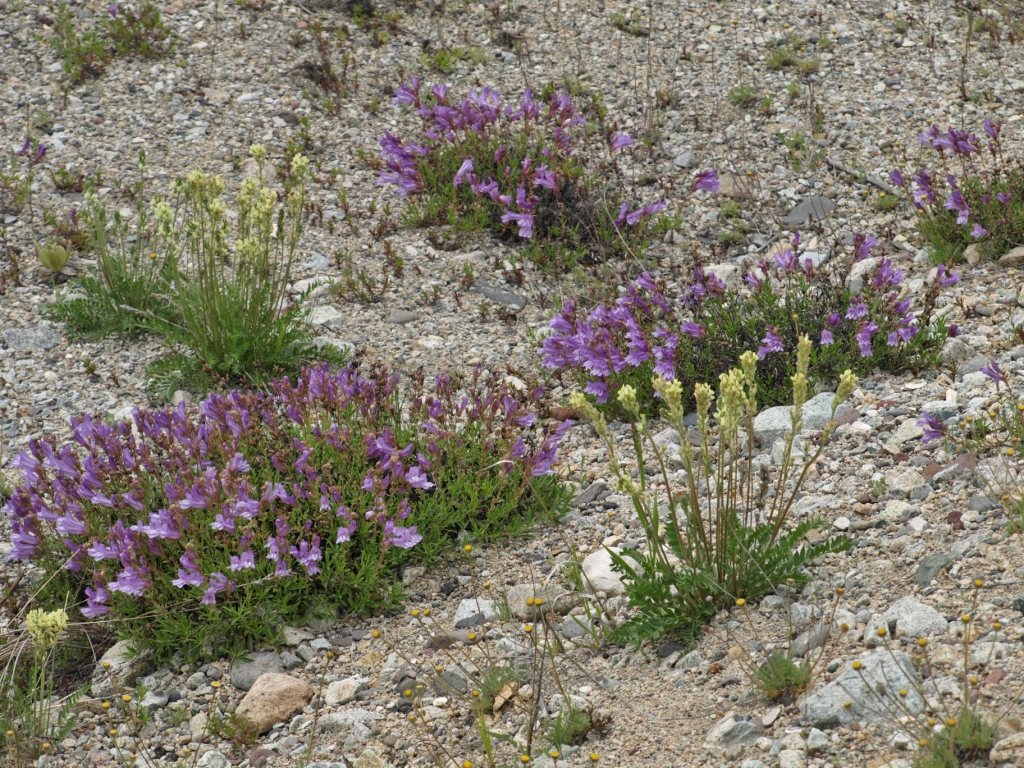
Growing in a roadside gravel pit, Highland Valley Copper Mine, Ashcroft, B.C. - June 8, 2014. A few miles west, the roadside display was even more spectacular - a veritable carpet of purple under the pine trees on both sides of the road.

Growing in a roadside gravel pit, Highland Valley Copper Mine, Ashcroft, B.C. – June 8, 2014. A few miles west, the roadside display was even more spectacular – a veritable carpet of purple under the pine trees on both sides of the road. Image: HFN

Plant habit is that of a tidy round mound. Closer investigation shows that the shrubby stems radiate from a central point, with a main taproot providing the anchoring point. Highland Valley Copper Mine, June 8, 2014.

Plant habit is that of a tidy round mound. Closer investigation shows that the shrubby stems radiate from a central point, with a main taproot providing the anchoring point. Highland Valley Copper Mine, June 8, 2014. Image: HFN

A brighter violet individual. The bloom time of Shrubby Penstemon coincides with that of the showy cream-coloured locoweed (Oxytropis sp.).

A brighter violet individual. The bloom time of Shrubby Penstemon coincides with that of the showy cream-coloured locoweed (Oxytropis sp.), making for an attractive colour combination which could be easily replicated in the rock garden. Image: HFN
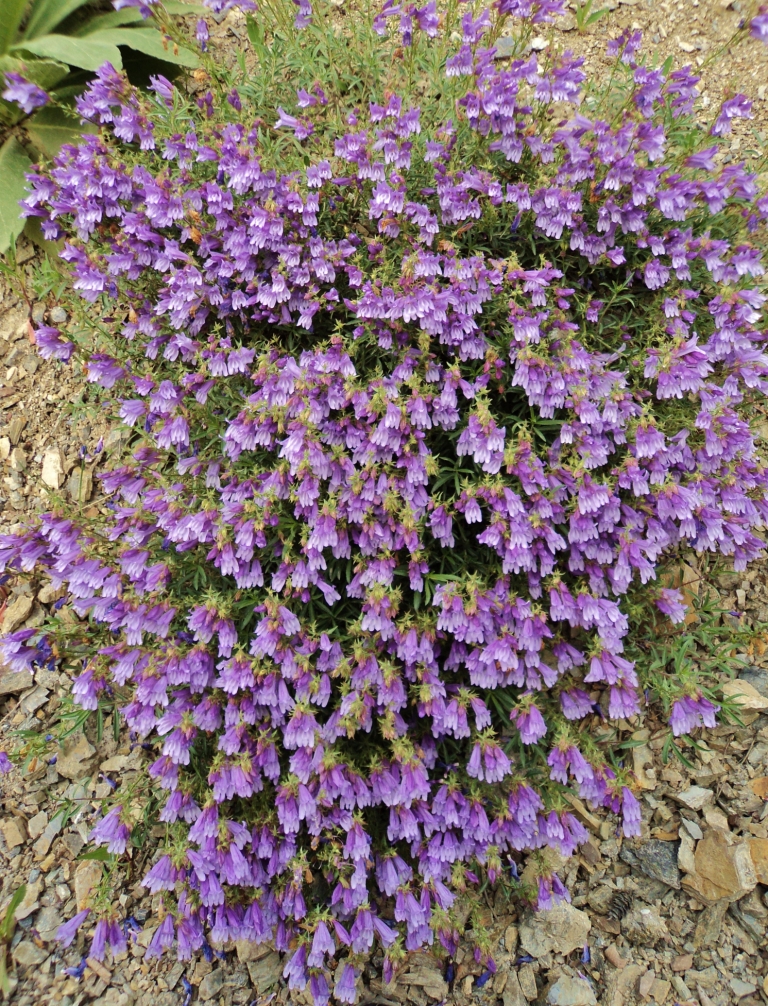
One of the nicest displays of Penstemon fruticosus var. scouleri that I've ever seen is on a steep roadside cutbank above Dunlevy Ranch in Soda Creek, B.C., a few miles south of Hill Farm. May 23, 2010.

One of the nicest displays of Penstemon fruticosus var. scouleri that I’ve ever seen is on a steep roadside cutbank above Dunlevy Ranch in Soda Creek, B.C., a few miles south of Hill Farm. This photo was taken May 23, 2010. Image: HFN


Read Full Post »


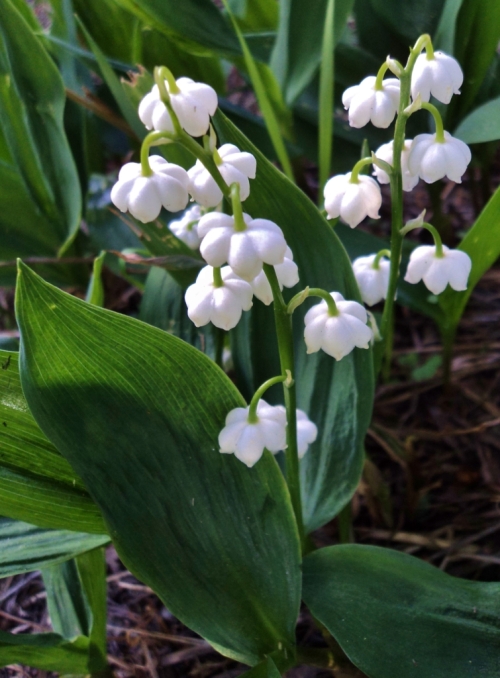
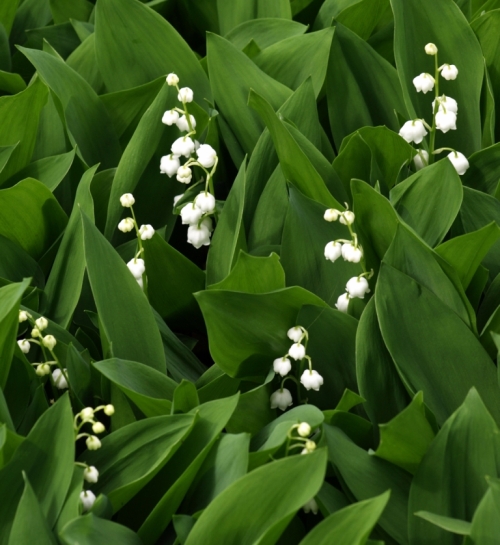
Convallaria majalis - Lily-of-the-Valley - Williams Lake, B.C. - May 23, 2014

Convallaria majalis – Lily-of-the-Valley – Williams Lake, B.C. – May 23, 2014. Image: HFN

Perennial. Zone 1. Asparagaceae, formerly Liliaceae. Woodland flower of Northern Europe, from England east and south to the Caucasus, into northern Turkey. Also found in Japan, and the North American Appalachians, though there is some speculation that the American population originated from introduced plants.

Lily-of-the-Valley has been grown in gardens since at least 1000 B.C. It is well documented in many herbals and plant lists, and was an important medicinal herb as well as a highly-regarded ornamental. Today most of its uses are decorative, though the species’ chemical constituents are being studied for various medicinal applications, and it is used in homeopathy as a remedy for various heart conditions.

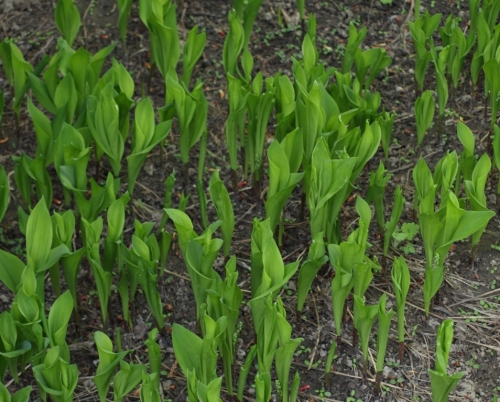
By mid to late April in Cariboo-Chilcotin garden, the tightly furled spikes of Lily-of-the-Valley start to emerge, soon unfolding into dark green, mule-ear shaped leaves, with the bloom clusters visible at the base of each foliage cluster.

A thriving colony of Convallaria majalis in early May - Hill Farm, 2014. If you look closely you will see the emerging flower buds at the base of the leaf clusters.

A thriving colony of Convallaria majalis in early May – Hill Farm, 2014. If you look closely you will see the emerging flower buds at the bases of the leaf clusters. Image: HFN

As May progresses the leaves expand to form a solid carpet of green, and the bloom stems lengthen, until one long-anticipated day one becomes aware, by catching a waft of the unmistakable fragrance, that the first flowers have opened.

Early June, Hill Farm, 2010.

Early June, Hill Farm, 2010. Image: HFN

The blooms are pristinely perfect: tiny pure white bells with pale yellow stamens, arranged in gently arching sprays. Thickly textured and long lasting, these are marvelous cut flowers, being free of their fragrance even after several days in a vase. Lilies-of-the-Valley are classic wedding bouquet flowers, and are commercially grown for the specialty florist market, though brides in months other than when the plants naturally flower should be prepared to pay a premium price for the artificially-forced greenhouse-grown blooms, which will also not be as fragrant as their garden-grown counterparts.

In the Victorian “Language of Flowers”, Lily-of-the-Valley signified “return to happiness” and “expectation of love”, which, along with the delicate virginal beauty of the blooms, no doubt accounts for its many bridal associations.

The fragrance of the flowers is outstanding, and perfumers have tried for centuries to mimic it in their concoctions, for though it is freely produced, it is not able to be captured in any sort of usable way. Reasonable imitations have been produced chemically, but there is truly nothing like the real thing, from a cluster of the dew-wet blooms picked on a fresh May morning.

To grow your own plot of Convallaria, you should first prepare a patch of shady ground by removing all surface tree and shrub roots and potentially competing grasses and other plants, and then digging in some well-rotted compost or manure. Plant the shallow-rooted pips just as they come out of their pots, with the rhizomes extending at right angles from the leaf clusters. Keep well watered and weeded the first season, and after that the plants should settle in to form an ever-expanding, maintenance-free colony. 

Lily-of-the-Valley does very well under trees and high-pruned shrubs, thriving on the filtered sunlight coming through leaves. Though very shade tolerant, plants do need some natural light if they are to bloom, so avoid dense shade such as that on the north side of buildings. Also avoid planting these in the mixed border, as they are happier where they can form a single-species colony. Very vigorous larger plants will crowd them out, and they in turn will gobble up more delicate things; the ongoing struggle will not be a happy thing, so it’s best to dedicate an area to your plantation right from the start.

Many people inquire as to the poisonous aspects of this plant, as it does appear on many “toxic garden flower” lists. Though all parts of the plant contain cardiac-affecting glycosides and digestive system-affecting saponins, though there are very few confirmed cases of actual poisonings, and no confirmed fatalities. It is theorized that, though potentially dangerous, the chemical constituents in the fresh plant matter are poorly absorbed by the digestive tract, so though accidental consumption might make you feel quite sick, it probably won’t kill you. (And I can’t imagine why one would accidentally consume this plant, as it is quite distinctive and not likely to be mistaken for anything else during any stages of its growth.)  The plants frequently produce red berries in the summer and autumn and this may be of some concern to those with very young children; be aware and garden with this in mind.

Convallaria majalis ‘striata’ – Hill Farm – May 26, 2014. Image: HFN
There are a number of interesting variations of this venerable garden plant occasionally available at specialty nurseries. We are in the process of propagating our own small colony of the striped-leaved variety, Convallaria majalis ‘striata’, and hope to be able to share these in a few more years. There is also a rosy-pink variation, Convallaria majalis ‘rosea’, and a double type, Convallaria majalis ‘prolificans’, though these last two are much less vigorous than their ancestors.


Read Full Post »

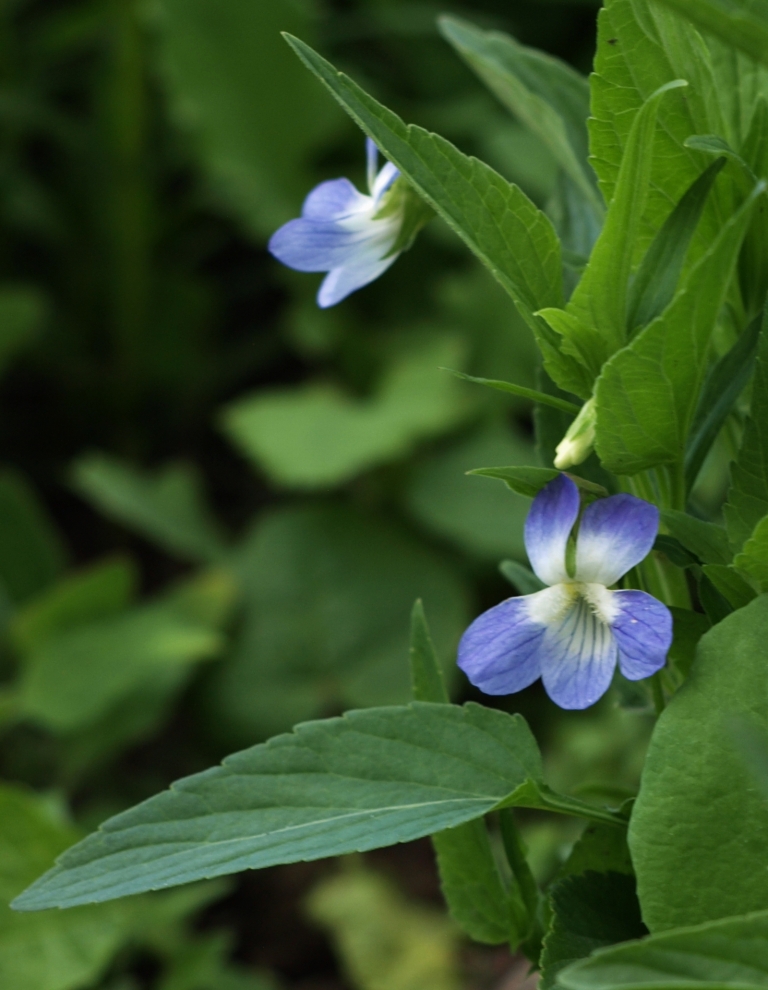
Viola elatior - Tall Woodland Violet - Hill Farm, Macalister, B.C. - May 23, 2014. One-year-old seed-grown plants.

Viola elatior – Tall Woodland Violet – Hill Farm, Macalister, B.C. – May 23, 2014. One-year-old seed-grown plants. Image: HFN

Perennial. Zone 4. Violaceae. Syn. Viola erecta; V. montana. Central and Eastern Europe, from Northern Italy and France east to Siberia and Northwest China. Natural habitat is sunny marsh meadows, moist woodland, and rocky water edges.

This charming Old World woodland flower has taken to garden life with great success, and is a popular item in the various specialty garden society seed exchanges, which may ultimately save this species from extinction. Tall Woodland Violet is becoming very rare now in much of its native habitat, due to agriculture and urban development pressures.

The plant habit is an upright clump of very elongated, bright green, thinly-heart-shaped foliage. The effect is rather shrubby in well-established plants. It may reach 18 inches in height where conditions are just right; even if shorter the plant habit is very upright versus spreading. Plants are completely herbaceous, and die to the ground in winter.

The centres of these violets are a pristine white, giving a two-tone effect which is accentuated as the bloom edges darken with age.

The centres of these violets are a pristine white, giving a two-tone effect which is accentuated as the bloom edges darken with age. Image: HFN

In May and June generous numbers of pale purple, 1-inch violets with white central shading and beards and dark purple whiskers are produced. Some references mention mild fragrance; others declare Viola elatior scentless. I checked mine, and couldn’t detect any aroma, so will assume that noticeable scent is not a general characteristic of this species.

The overall effect of this pretty violet is that of quiet elegance. Just the thing for a not-too-dry corner of the rockery, to set off lower-growing plants such as the miniature campanulas or Oenothera minima, or to follow small spring bulbs.

Sun to part shade; appreciates humus-rich soils. Best with a steady supply of moisture, though it will handle dryer conditions if grown in shade.


Read Full Post »

Asarum europaeum - European Wild Ginger - Dense foliage mat - Williams Lake, B.C. - May 23, 2014

Asarum europaeum – European Wild Ginger – Showing the beautiful foliage and densely mat-forming habit – Williams Lake, B.C. – May 23, 2014 Image: HFN
Perennial. Zone 3. Aristolochiaceae. Central Europe, Scandinavia, Russia to western Siberia. A creeping groundcover of moist deciduous and mixed forests. Received the Royal Horticultural Society’s Award of Garden Merit in 2007. A.k.a. Hazelwort, for its presence under hazelnut bushes in its native woods, and Asarabacca, perhaps in reference to its long-ago use as a medicinal snuff.

Thickly textured, very glossy, slightly marbled, heart-shaped foliage is the main attraction to this quietly handsome woodlander.

Plants spread by creeping roots and modest self seeding to form dense mats, a slow process but very rewarding in the long term.

Excellent with woodland ferns and as an underplanting to trees and shrubs, as long as there is sufficient soil and humus to keep the Asarum well nourished. Shade and adequate summer moisture are much appreciated; this is not a particularly drought tolerant plant.

Leaves reach 4 inches or so in height; each plant is about 4 to 6 inches wide or so, so it is best to plant several in a group to get a head start on your own wild ginger patch. The plant is evergreen in mild climates, but dies down over winter in the Cariboo. Do not clip back or pull away the old foliage but leave it be to shelter new growth. Completely maintenance free!

The common name comes from the mild ginger aroma of the shallow, rather fleshy roots. The roots were once used medicinally as a purgative, and for various skin ailments, and to induce sneezing. Leaves apparently smell and taste like pepper; I haven’t investigated this myself. Asarum europaeum is still used in homeopathy.

The flowers of this plant are exceedingly unique. They are tiny, three-lobed, tubular structures, and are produced at the very base of the foliage. These lie flat on the ground, and emit a faint carrion-like aroma, which attracts pollinating insects – small flies, ants, and crawling beetles. One thing to note is the woolly hairiness of the stems and outer blooms, in contrast to the glossy smoothness of the leaf surfaces.

Close-up of Asarum europaeum flowers. Completely hidden under the foliage, these are pollinated by beetles and crawling insects.

Close-up of Asarum europaeum flowers. Completely hidden under the foliage, these are pollinated by beetles and crawling insects. Image: HFN

??????????????????????

Happily at home in a Williams Lake garden, under native fir trees on a west-facing slope, Asarum europaeum attractively coexists with natives such as holly-like Oregon grape (Mahonia aquifolium). Image: HFN
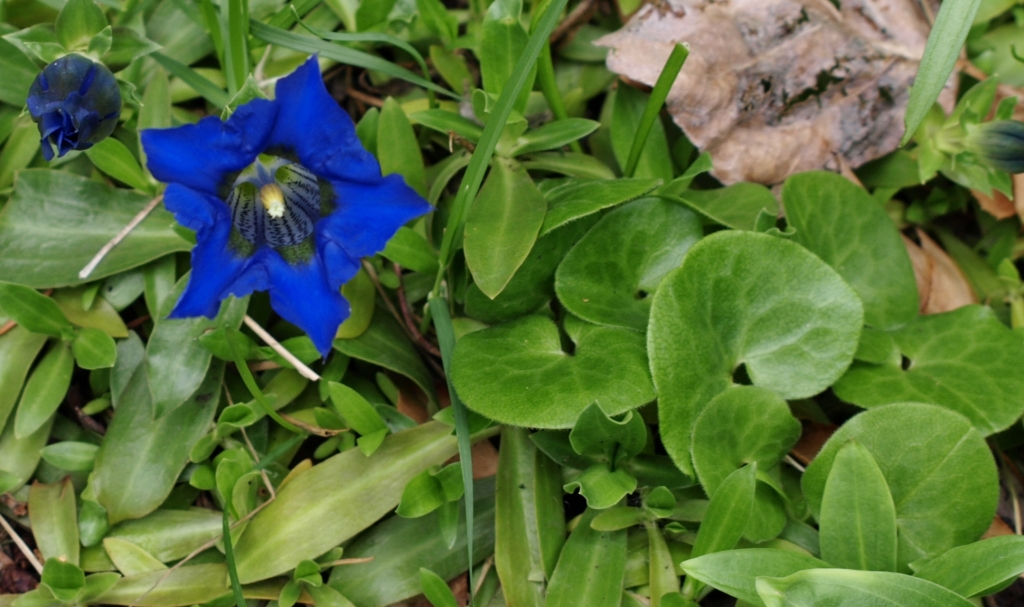
Gently encroaching on another dense mat-former, Gentiana acaulis, in a Williams Lake woodland garden. May 23, 2014.

Gently encroaching on another dense mat-former, Gentiana acaulis, in a Williams Lake woodland garden. May 23, 2014. Image: HFN
Read Full Post »


Mukdenia rossii syn. Aceriphyllum rossii - Hill Farm, Macalister, B.C. - May 21, 2014

Mukdenia rossii syn. Aceriphyllum rossii – Hill Farm, Macalister, B.C. – May 21, 2014 Image: HFN

Perennial. Zone 4. Saxifragaceae. Native to Korea, Northern China and Manchuria, where it grows in cool deciduous forest and on rocky slopes and subalpine ravines. The name Mukdenia comes from the Chinese province of Shenyang, then called Mukden, while the specific name, rossii, is after a Scottish missionary John Ross* (1842-1915) who established one of the first Christian churches in the region.

Quietly beautiful in all stages of growth. I fell for this the first time I saw it in autumn-leaf mode, long after flowering, in a coastal garden. The silk-sheened foliage was flushed with crimson, but that was merely what initially caught my eye; on closer examination I saw that the structure and habit of the plant made it a perfectly self-contained woodland garden sort of clump former. A bit of research and a description of the starry white spring blooms merely confirmed my first impression that this was a Very Good Thing, and so I set off on my quest to obtain it for myself.

This proved much more challenging than I had anticipated. Though various coastal nurseries occasionally showed the deluxe cultivar ‘Crimson Fans’ on their stock lists, there never seemed to be one available on my infrequent visits. I did find one rather bedraggled specimen on an end-of-season sale table for a breathtaking $40, but couldn’t bring myself to buy it for that sum, not knowing if it would prove hardy for me. (All plant people are by nature gamblers of sorts, but, like most of us, I do have my limits!)

Then, ten years or so ago, I found Mukdenia rossii listed on Kristl Walek’s most excellent Gardens North perennial seed list. A half dozen tiny seedlings survived the rigors of the germination and growing out stage, and I was set. I mulled over a suitable placement for them, and settled on the front of the border on the west side of the house, an area shaded by trees in the afternoon, and well protected by snow from the house roof in winter. The plants approved, and settled in happily, to expand their clump modestly each season and to give me more and more spikes of their tiny white starflowers with every succeeding spring. There they are at the top of the post, and here they are in close-up mode.

Hill Farm - May 21, 2014. A closer look at the starry blooms will show this plant's membership in the venerable Saxifrage family.

Hill Farm – May 21, 2014. A closer look at the starry blooms will show this plant’s membership in the venerable Saxifrage family. Image: HFN
I occasionally consider stealing some divisions from my cherished little colony, but so far I have resisted that temptation. It is modestly thriving but is in no way outgrowing its allocated space; I think I will leave it well enough alone. Seed remains hard to come by, and I haven’t seen it on Kristl’s list recently. I have managed to germinate a few seedlings from my own plants, but as they are delicate things in the early stages I sadly lost them all before they reached transplanting stage – damping off, too hot a greenhouse, and a day’s missed watering during the busiest time of the nursery year spelled their various dooms. I shall try again, though, because this is something I would love to share with my fellow Cariboo gardeners.

So, on to the nitty gritty.

Mukdenia rossii forms a compact clump which expands by slowly creeping rhizomatous roots. Rosy-blushed, crowded bud spikes emerge in earliest spring a little before the foliage, and the budding stems and leaves grow a little day by day, until at last, in late April or early May, the first white stars appear. These add to the number day by day, until at last the branched panicles are drooping from their combined weight; the show lasts for weeks, well into June if we don’t have a heat wave. The flowers slowly fade to brown, and the aging seed heads may be left in place or clipped off if you are of the exceedingly tidy sort.

Foliage is broad, fan-shaped with serrated edges, and of a most attractive silken texture, with a lovely light-catching sheen. The leaves are well flushed with dark red upon emergence, and though this fades to a uniform green for the majority of the growing season, autumn again brings out the red tints, until the plants disappear under the snow.

Mukdenia appreciates humus-rich soil and a fair bit of moisture in the heat of summer, though it never droops. Afternoon shade is definitely appreciated; this can be grown under tree cover in a woodland setting.

Once established, bloom stems will reach a foot or so in height, with clumps expanding to 1 or 2 feet. Perhaps nicest in a colony, with several planted together, as it is grown in the University of British Columbia Botanical Garden, and, in a more modest way, my own shady border.

A gorgeous colony of Mukdenia rossii in full bloom, UBC Botanical Garden, Vancouver, B.C. - April 8, 2014.

A gorgeous colony of Mukdenia rossii in full bloom, UBC Botanical Garden, Vancouver, B.C. – April 8, 2014. Image: HFN
UBC - April 8, 2014

UBC Botanical Garden – April 8, 2014 Image: HFN

I did eventually acquire a small start of ‘Crimson Fans’, but sadly it inadvertently spent a recent winter with the crown crushed under a brick which had tipped sideways – it (the brick) was meant to protect a promising hellebore seedling – and it (the mukdenia) was not looking at all well, so is now residing in a pot, being nursed back to health.

This is the one you will likely find if you are yourself scanning the more southerly nurseries. It is also sold under the original Japanese name, ‘Karasuba’. Ignore whatever the zone rating on the tag says – it might be a conservative Zone 6 or 7 – and give it a try. I would be confident to recommend it to at least Zone 4, or even Zone 3 if it can be guaranteed good snow cover. The red colour does fade by mid spring, after which it looks pretty much like the species type, but it is very pretty while it lasts.

Nice plant. Worth a try.

*I wondered if John Ross was also involved with botany in some way, but I found no mention of it in the few places I checked. There is this short biography, however, from the Biographical Dictionary of Chinese Christianity:

Born in northern Scotland, Ross served several Gaelic-speaking churches before leaving for China under the United Presbyterian Church in 1872. His ministry deeply touched two areas, Manchuria and Korea. By 1873 he had preached his first sermon in Chinese and had pioneered Manchurian work through wide itineration from his post in Shenyang (Mukden).

Known for his generous spirit toward Confucianism and Chinese ancestral rites, he supported the idea of a Chinese church that would not be a Western replica. In 1873, living on the northern border of a Korea still closed to outsiders, he met traders from the “hermit kingdom.” His growing interests produced the first Korean primer (1877) and grammar (1882) in English, the first history of Korea in any Western language (1879), and, under his direction, the first Korean translation of the New Testament (1887). Its unheralded distribution in Korea produced an authentic church there before Protestant missionary itineration began widely within the country. He retired to Scotland because of ill health in 1910 but continued to write and lecture.


Read Full Post »

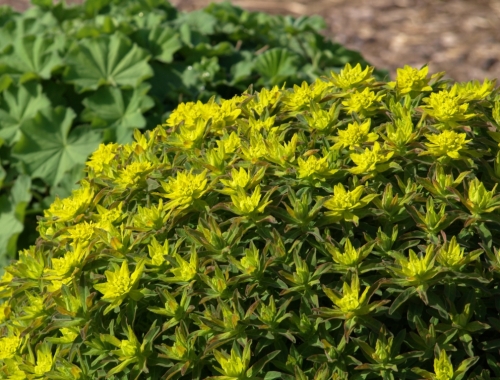
Cushion Spurge - Euphorbia polychroma (syn. E. epithymoides) - Prince George, B.C. - May 18, 2014

Cushion Spurge – Euphorbia polychroma (syn. E. epithymoides) – Prince George, B.C. – May 18, 2014 Image: HFN

Perennial. Zone 1. Euphorbiaceae. Native of Europe from southern Germany to the Ukraine, Bulgaria, Greece and Turkey, where it grows in dry forests, mixed meadows, and on rocky hillsides.

Euphorbia was named by Linnaeus in 1753 for Euphorbus, the Greek physician of King Juba II (circa 12 B.C.E.) of ancient Numidia and Mauretania (approximately present-day Morocco), who reportedly discovered medicinal uses for the local species. While Linnaeus assigned the species name epithymoides for this plant, it was renamed polychroma in the 1850s by yet another classifying botanist, Anton Josef Kerner, and this name soon took precedence and is the more commonly recognized designation today. Polychroma is after the Greek polu – ‘many’ – and xrwma – ‘colour’, a reference to the shaded colours of the bracted stem tops and ornate flower clusters.

Sun to part shade; average conditions. This appears to be a deer resistant plant – something to note for those of you afflicted by these increasingly bold and destructive garden pests.

It’s well into May, and everywhere I go these days I note the unmistakably glow of this unique specimen plant. It flourishes happily in mature, well established gardens as much as in newer, more avant-garde plantings accenting newly built homes in the posher parts of town. When (and where) the lilacs bloom, then (and there) too the cushion spurge.

I first became aware of this rather unusual and eye-catching ornamental during our first spring living in an older neighbourhood in a small Alberta town. Many of the front porches of the modest clapboard-sided 1930s’ and 40s’ era homes were flanked by perfectly globular, neon-yellow-tipped twin bushes. Some kind of exotic shrub? – I wondered to myself, until a visit to the botanical garden at the Calgary Zoo acquainted me with its Latin name, and I was able to track it down in the gardening books. (This was long pre-internet – I smile at the memory of how laborious this sort of rather basic research used to be, before the wonders of the Google image search!)

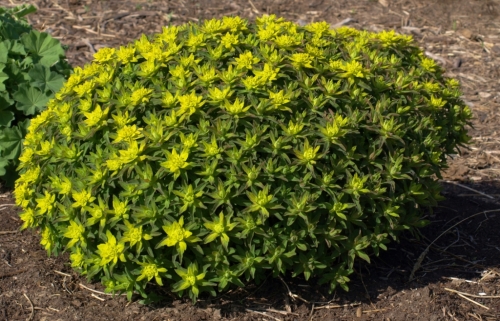
The natural form of this plant is neatly globular, though it may occasionally "birdsnest" with summer thunderstorms. If this happens, a hard trim to within 6 inches or so of the crown will result in quick regrowth to tidy cushion shape.

The natural form of this plant is neatly globular, though it may occasionally “birdsnest” with summer thunderstorms. If this happens, a hard trim to within 6 inches or so of the crown will result in quick regrowth to tidy cushion shape. Image: HFN

Cushion spurge grows to 18 inches tall and 2 ft. wide where happy – which is most places, as it is an adaptable, good-natured thing. It thrives in sun to part shade, and in modestly moist to dry soils, though it doesn’t care for overly soggy ground. Once established it is very drought tolerant, though it will definitely appreciate the occasional soaking in hot summers.

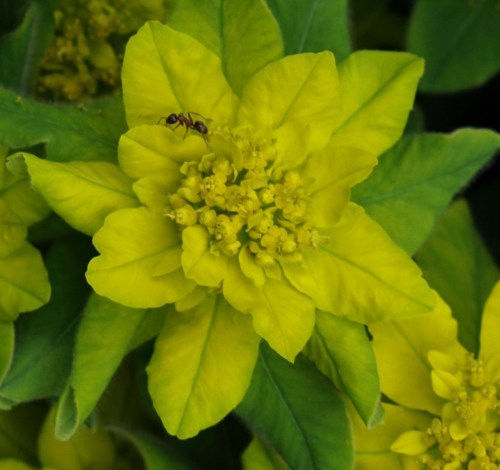
Clumps of woody-based stems are lined with whorls of soft green, rounded foliage, which are tipped with the modified leaves commonly referred to as bracts, though the correct term in this case is cyathium leaves. These turn a vivid, glowing, chartreuse-yellow, centered with clusters of tiny, even brighter yellow petal-less florets. These clusters include nectar-rich glands – nectaries – which reward foraging pollinators. I have not noticed that bees are particularly attracted to the blooms – though they do visit – but the highest traffic seems to be small flies, and ants and other crawling insects.

??????????????????????

Note the small visitor. Image: HFN

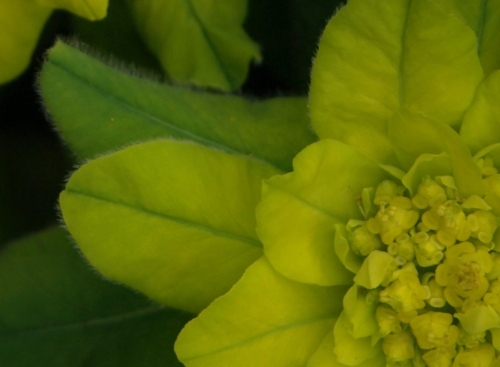
An even closer view showing flower structure, and the downy hairs which give the entire plant its velvety texture.

An even closer view showing flower structure, and the downy hairs which give the entire plant its velvety texture. Image: HFN

After blooming and pollination – peak bloom time is all through May and into June – the yellow colour fades to a uniform green. Seed capsules form which eventually pop open later in the summer, catapulting seeds out into the garden, where they sprout in modest numbers. Seedlings are easily removed or transplanted to more desirable locations, where they quickly settle down to the business of growing and forming yet another perfect little globe.

Cushion spurge remains attractive through summer, and can be left to fend for itself or clipped back to produce fresh foliage. The plant fades to yellow in the autumn, frequently showing a red stage before the leaves finally wither after the last, hardest frosts.

Several “improved” (or perhaps one might say “enhanced”) cultivars of Euphorbia polychroma are popular in the nursery trade, including the burgundy-blushed ‘Bonfire’, a patented selection of the Euphorbia polychroma ‘purpurea’ sport which has been grown as a desirable rarity for many years, sometimes under the cultivar name ‘Candy’, and the white-pink-green ‘First Blush’. Of these two types I much prefer the red-leaved variety, as I’ve noticed that the white-variegated form is much less vigorous, and seems to show a high percentage of deformed and puckered leaves.

Euphorbia polychrome 'purpurea' - red-leafed form - an excellent specimen plant, more restrained and smaller than the green-leaved original.

Euphorbia polychrome ‘purpurea’ – red-leaved form – an excellent specimen plant, slightly more restrained and measurably smaller than the green-leaved original. Hill Farm, May 21, 2014. Image: HFN

E. polychroma 'purpurea' shows its richest dark red shading just before the yellow bracts fully develop; after blooming it fades to a uniform green.

E. polychroma ‘purpurea’ shows its richest dark red shading just before the yellow bracts fully develop; after blooming it fades to a uniform green. Image: HFN

The common form of this handsome plant is a venerable garden old-timer, having been grown for centuries both for ornament and for occasional medicinal use. John Gerard’s masterwork The herball, or Generall historie of plantes, first published in England in 1633, reported of  Spurge that “…the juice or milke is good to stop hollow teeth…”  A modern commentator theorizes that the poisonous latex probably destroyed the nerve endings. The specific species of Euphorbia referred to is unknown, though all share the same milky (and irritating) sap. 

Another medicinal use, and the origin of the common name of this very large genus (over 2000 species, found worldwide), is that of a purgative – a vigorous laxative – though one that was prescribed with some caution, as the violence of its action could be fatal if the decoction was too strong. From the French medical term describing the process, “espurgier”, came  the English “purge”, and hence “spurge”, or so the theorizing goes. Though we no longer find ourselves partaking of the plant in any way except that of enjoying its attractive appearance, it is a good idea to treat the plant with sensible respect.

The sap of some species was used to beautify the complexion, and to remove warts, but the herbalists warned about the dangers of letting it get into the eyes, as it could cause severe damage, even blindness, a caveat which has been brought forward to the present day. Some people experience a skin rash from handling the cut foliage, so it is best to be on the safe side and use gloves while pruning. Avoid contact with the milky sap, and supervise young garden visitors if they are too young to heed “don’t touch” warnings.

Don’t let this last bit about the fearsome qualities of the sap put you off – this is a very widely grown plant and incidents of problems with it are exceedingly rare. It doesn’t need much fussing, and can safely be handled with the same common sense that applies throughout the garden. “Don’t put the monkshood leaves in the salad; don’t poke yourself in the eye with the spurge.” There, see how easy that is?! 🙂

One final note. Euphorbia polychroma/epithymoides was awarded the Royal Horticultural Society’s prestigious Award of Garden Merit in 1993, confirming its excellent ornamental qualities to the world at large. Experienced gardeners will have taken this as a confirmation of what they already knew. This is a quietly grand garden plant.


Read Full Post »

Palmate Coltsfoot - Petasites frigidus var. palmatus - Van Dusen Garden, Vancouver, B.C. - April 8, 2014.

Palmate Coltsfoot – Petasites frigidus var. palmatus – Van Dusen Garden, Vancouver, B.C. – April 8, 2014. Image: HFN


Perennial. Zone 2. Asteraceae. (Syn. Compositae.) Widespread through Western North America. Common to wet coniferous forest and subalpine regions of B.C. A.k.a. Arctic Sweet Coltsfoot.

Lewis J. Clark, in Wild Flowers of British Columbia, 1973:

Petasites derives from the Greek petasos, a broad-rimmed hat, which describes the wide basal leaves. Palmatus (is) from the large hand-shaped leaves…

Most Composites bloom late in the year, but the Colt’s Foot pushes its thick stem through the ground at the beginning of March, sometimes while snow still lingers. Soon the rapidly lengthening shoot displays a heavy, flattened cluster of purplish (sometimes white, rarely yellow) flower-heads. These are of two kinds, the staminate soon withering. The pistillate-heads usually have a few short ray-florets. By early summer they are succeeded by clusters of achenes whose radiating pappus recall a very large, but flattened, Dandelion “puff”.

??????????????????????

Petasites frigidus var. palmatus – close-up of pistillate heads. Image: HFN

??????????????????????

Palmate Coltsfoot – Van Dusen Garden – April 8, 2014. Image: HFN

This species is very similar to Sweet Coltsfoot, Petasites frigidus var. nivalis, and as the ranges overlap, hybridization often occurs, making positive identification something of a challenge.

No matter what the details of nomenclature, the native Petasites found throughout the Cariboo are quietly spectacular in a low-growing, botanically interesting sort of way, being among the earliest bloomers and a sign of the start of the brief but intense growing season proper.

These plants happily grow in the garden, being most suited to moist wild gardens and boggy areas. They do spread vigorously where happy via underground rhizomes, so that is something to keep in mind when siting.

Coltsfoot is reported to be attractive to early foraging bees and other pollinating insects.

Ethnobotanical uses of Palmate Coltsfoot (and its relations) include flowering stalks and young leaves being used as an early “potherb”, no doubt highly welcome after a long winter of no fresh greens. According to the field guide Plants of Northern British Columbia (MacKinnon, Pojar and Coupé, 1992), Petasites leaves were used to cover berries in steam-cooking pits. Medicinal uses were widespread, with decoctions used to treat chest and respiratory ailments, as well as externally applied to treat rheumatism.

An interesting use which I have seen referred to in several places is the value of the plant as a salt substitute, either as an addition to stews, or from the ashes of the burned leaves.

As with any medicinal or culinary use of plants, it is best to be cautious about consuming or applying anything one is not familiar with; the above uses are provided merely as historical notes and not recommendations or suggestions. Petasites species contain alkaloids which may cause liver damage when ingested.

Palmate Coltsfoot at UBC Botanical Garden, April 8, 2014. This population shows the rosy colour variation.

Palmate Coltsfoot at UBC Botanical Garden, April 8, 2014. This population shows the rosy colour variation. Image: HFN

Newly emerging foliage in the background - notice the "palmate" form of the "hand-like" leaves. UBC Botanical Garden, April 8, 2014.

Newly emerging foliage in the background – notice the “palmate” form of the “hand-like” leaves. UBC Botanical Garden, April 8, 2014. Image: HFN

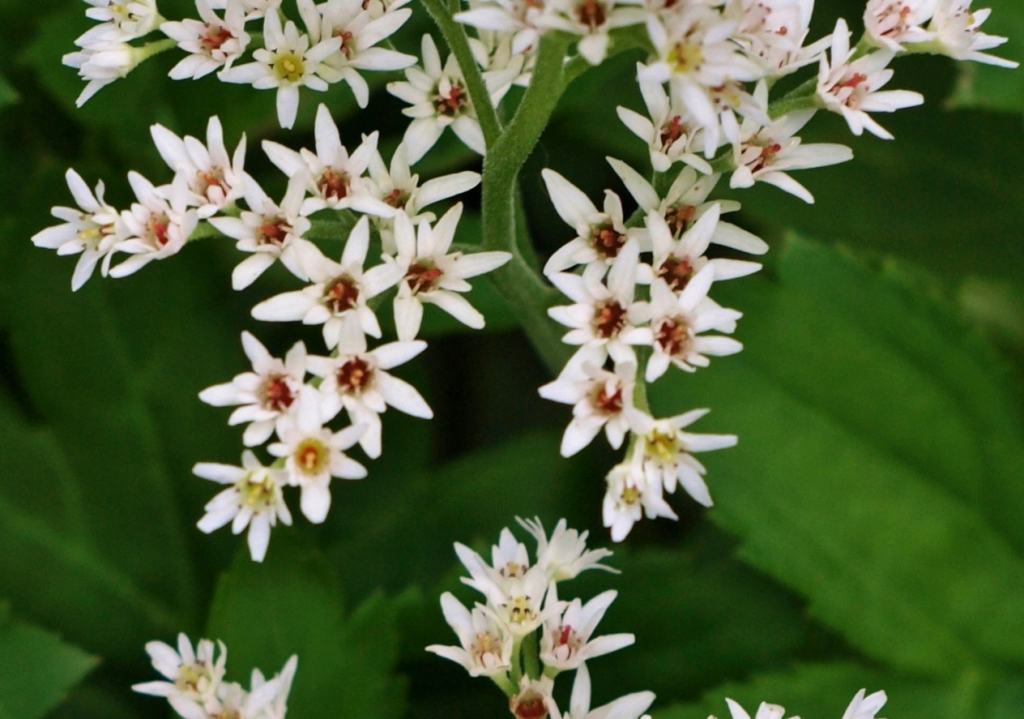
Close-up of flower cluster. UBC Botanical Garden, April 8, 2014.

Close-up of flower cluster. UBC Botanical Garden, April 8, 2014. Image: HFN

Read Full Post »

Sweet Coltsfoot - Petasites frigidus var. nivalis - near Tyee Lake, B.C., May 9, 2014.

Sweet Coltsfoot – Petasites frigidus var. nivalis – near Tyee Lake, B.C., May 9, 2014. Image: HFN

Perennial. Zone 2. Asteraceae. (Syn. Compositae.) Widespread through Western North America. Common to wet coniferous forest and subalpine regions of B.C. A.k.a. Alpine Coltsfoot, Arctic Butterbur.

With the departure of the last of the sodden winter snow and the first faint flush of green as plants awake from their long dormancy, the sudden appearance of the exotic-looking coltsfoot bloom stems is a welcome surprise to the keen native plant gardener or roving botanist.

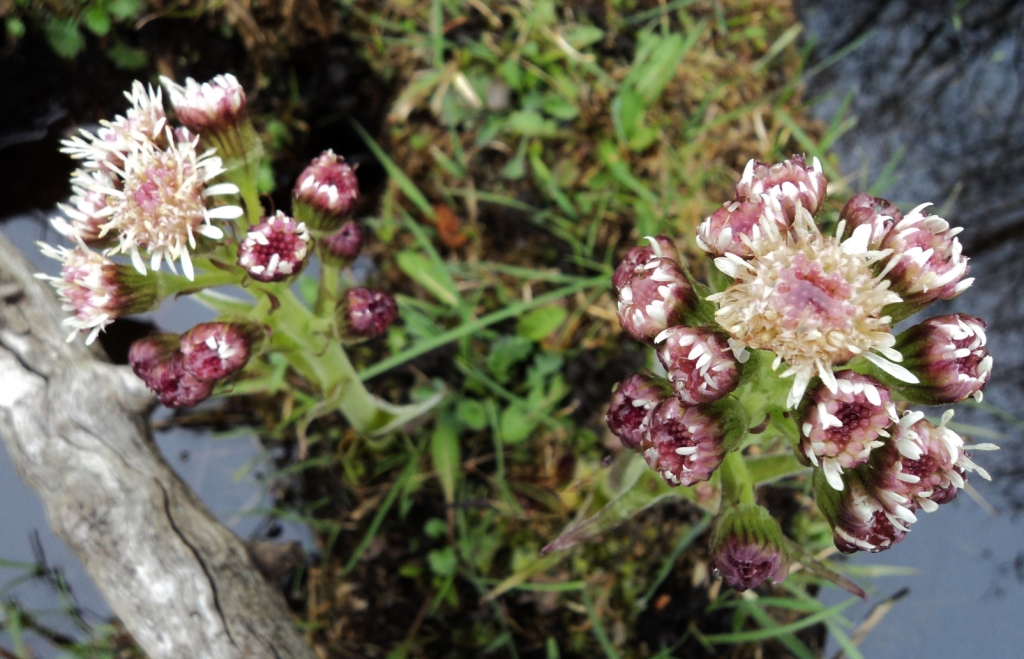
Thick, fleshy stems appear, lined with bract-like leaves and topped by clusters of densely packed disc flowers. Plants are either male, with all disk flowers, or female, with ray as well as disk flowers, as in the photo above. This plant’s membership in the Composite Family (think sunflowers, Helianthus annuus, as the poster child of the composites with well-differentiated ray and disk flowers in a single head) is very obvious once one takes a close look at the flower structure, and especially when the feathery, dandelion-like seeds start to mature.

???????????????????????????????

Image: HFN

Blooms are most frequently white, but can be shades of pink, and occasionally a deep ivory-yellow.

Leaves appear a few weeks after the bloom stems, and as they often arise at some distance from the flowers due to the plant’s extended underground rhizomatous root system they are often  not associated with the flowers. Many of the Petasites have massive foliage – the leaves of the vigorous Japanese Butterbur, Petasites japonicus, easily reaching 2 feet across, and those of another common British Columbia species, P. palmatus, often reaching a foot wide – but P. frigidus var. nivalis is a more modest creature, with glossy, deeply wrinkled, raggedly toothed, grape-like leaves only 6 to 8 inches across.

The common name “coltsfoot” arise, according to Lewis J. Clark, from the appearance of the leaves, rather than the flowers:

Soon after the appearance of the flowering stems, stout leaf-shoots emerge. They are folded in an extraordinary manner, with the hairy lobes reflexed, at an early stage evoking the metaphor of the little foot of a colt.

Sweet Coltsfoot is often found in wet locations, thriving in boggy areas and on stream and lake edges. It is something of a spreader, forming thriving colonies where happy, and is occasionally seen as a happily domesticated “tamed wildflower” in bog and woodland gardens.

Typical habitat of Petasites frigidus var. nivalis, along a boggy lakeshore.

Typical habitat of Petasites frigidus var. nivalis, along a boggy lakeshore. Image: HFN

Read Full Post »

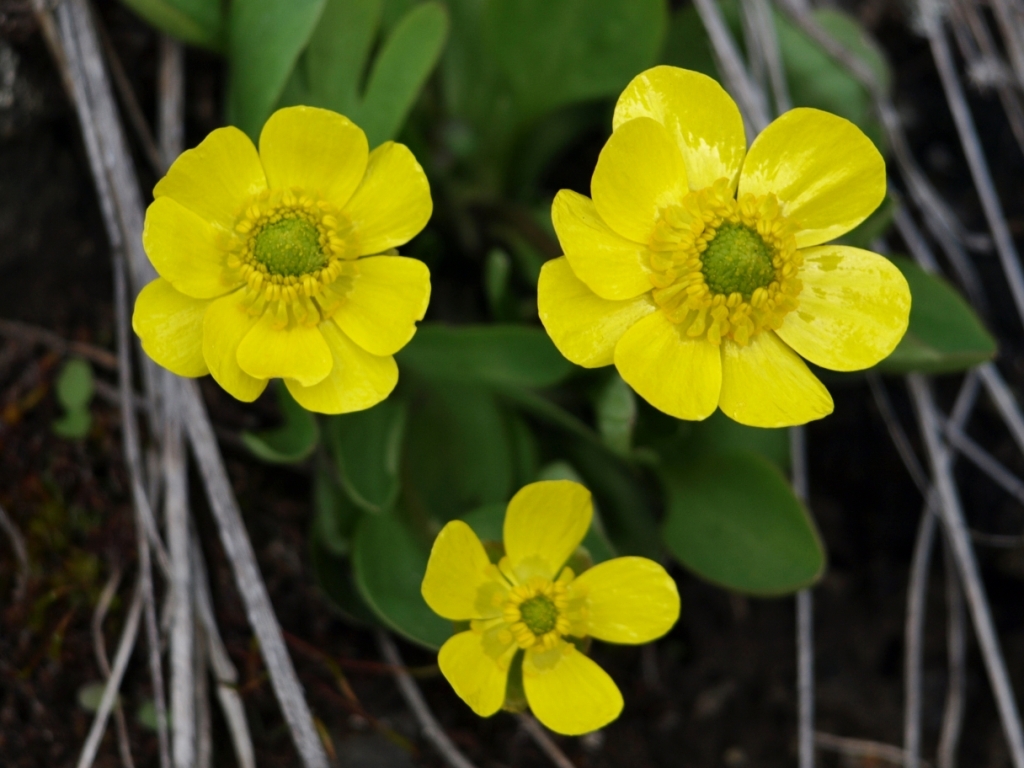
Spring's first flowers - Sagebrush Buttercups on the Hill Farm hillside, April 16, 2014.

Spring’s first flowers – Sagebrush Buttercups on the Hill Farm hillside, April 16, 2014. Image: HFN

Perennial. Zone 2. Ranunculaceae. Western North America. Interior and subalpine regions of B.C. and Alberta and into Saskatchewan; in the U.S.A. south to New Mexico, and east to North and South Dakota and Nebraska.

As the snow recedes from our river-valley hillsides each spring we eagerly kneel on the snowmelt-soggy ground to check on the state of the sagebrush buttercups. First of the spring flowers by far, blooming as soon as late March, their opening signals the very beginning of the progression of other springtime markers – the first returning Canada geese; the first robins and bluebirds; the appearance of the pollen-dusted catkins of the poplar tress and then the cottonwoods; the first evocative smell of “green” after a spring rainfall; the first day the horses leave their hay piles untouched and instead nuzzle through last autumn’s rustling fallen foliage for those first elusive but oh-so-welcome blades of grass…

We’ve made it through another cold time, for look, here are the buttercups again!

This is a tiny creature, but its cheerful blossoms shine like the sun, and a flourishing colony in full bloom is an amazing sight in late April and early May.

The specific name glaberrimus means “smoothest”, and refers to the foliage: freshly green, gently lobed, and slightly succulent. Purple-flushed flower buds appear on short stems which lengthen as the flowers open to a height of perhaps six inches at the utmost; most are only three or four inches tall. Five-petalled buttercups are typical of their race, being reflectively shiny as to petal surface, with a ring of thick yellow anthers surrounding the protruding cluster of pistils – potential achenes which will mature into ripe seeds in May and June.

Clusters of shallowly anchored, thickened, semi-tuberous roots provide the stored energy for R. glaberrimus‘s early spring flourishing; plants remain green through the entire growing season, and an investigation in autumn reveals the next spring’s buds already formed in the leaf axils at the base of the foliage; ready for emergence after a winter dormancy under the snow.

Enjoy this buttercup on your spring rambles; it is locally abundant throughout the Cariboo-Chilcotin, especially along roadsides through the Fraser River valley’s Douglas fir belt, and in the grasslands around Williams Lake.

Though I have never been tempted to bring this pretty wildflower into my own garden – it is happily abundant on the grassy hillsides of our farm and makes an ideal excuse for many springtime excursions to check on the progression of the colonies’ blooming – I have seen it established in a number of alpine gardens where it thrives generously, for it appears to be a healthy and adaptable plant.

Full sun suits Ranunculus glaberrimus best if its natural habitat is any indication, and it is very drought tolerant once established, though it appreciates springtime moisture.

Though technically Ranunculus glaberrimus has five petals, some populations show a tendency to producing extras, doubling or tripling the modest prototype.

Though technically Ranunculus glaberrimus has five petals, some populations show a tendency to producing extras, doubling or even tripling the modest prototype. Image: HFN

???????????????????????????????

Image: HFN


Read Full Post »


???????????????????????????????

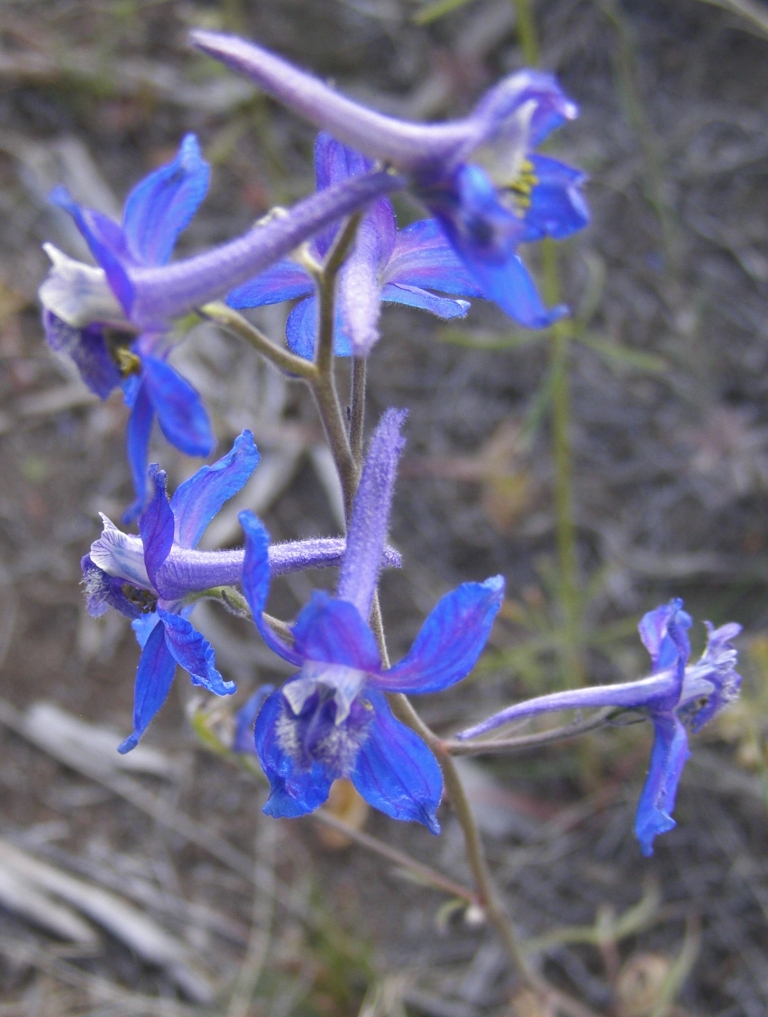
Low Larkspur growing on grassy dry sidehills along the Chilcotin River at Farwell Canyon, near Riske Creek, B.C., May 13, 2010. Note contrasting violet veining on the cobalt blue petals.

Perennial. Zone 2. Ranunculaceae. Western North America, from California north to southern third of British Columbia, and eastwards to southern Sakatchewan, South Dakota and Wyoming. Abundant in areas of the eastern Rocky Mountain foothills.  A widely variable species, from alpine forms only a few inches tall to grassland individuals reaching 18″ or taller, D. bicolor is now sometimes classified as D. nuttallianum, with regional subspecies.

This low-growing spring-blooming flower is frequently found on the dry hillsides and grasslands of the Cariboo-Chilcotin, especially along the Fraser River corridor in the dryland fir and sagebrush belt. Though a close relative of the tall garden delphiniums and larkspurs, as flower form and colour show, this is a much more petite thing, growing from 6″ to 18″ or so in height, and blooming briefly in April and May.

Lewis J. Clark calls it

…A small but showy species, inhabiting Bunch-grass and Ponderosa Pine country from Osoyoos to the Rockies.

At Macalister, just south of Quesnel on the Fraser River, we are at the northern limit of its grassland range, though variant populations have been reported in subalpine regions northwest of Prince George.

Low Larkspur is a tuberous rooted plant, which frequently behaves like a summer ephemeral. Slender bloom stalks appear in earliest spring, the flowers expand and are pollinated by butterflies and long-proboscissed bumblebees, and the finely divided foliage then withers on the stems, with the plant fading away into the surrounding vegetation, leaving clusters of innocuous yellow seed capsules in place of the cobalt and purple-blue blossoms.

On our own dry and rocky Fraser River hillside, this lovely larkspur blooms in early May alongside golden Arnica, creamy Heuchera cylindrica, sulphur-yellow Lithopspermum ruderale, and rosy-flowered Geum triflorum – a rewarding palette of contrasting wild colour for the springtime rambler to enjoy.

Despite its great beauty there is a sinister side to this gorgeous flower. In its spring growth phase, D. bicolor (and, incidentally, all of its relatives) is highly toxic to cattle. Because its foliage turns green before many of the rangeland grasses, browsing cattle sometimes seek it out, and there are numerous well-documented cases of mass bovine fatalities in regions where wild larkspur is abundant. By seed stage the toxicity has greatly abated; in our region this generally coincides with range turnout, and I am not personally familiar with toxicity episodes in the Cariboo-Chilcotin, though when I was working on a ranch in the Alberta foothills it was a very real concern for local cattlemen during spring turnout. Interestingly enough, the toxic effect seems specific only to cattle; sheep and wild browsers appear to be unaffected, and sheep have been used to eliminate the plant in some areas where bovine larkspur poisonings are of particular concern.

Low Larkspur moves happily into the cultivated garden, but with its delicate habit and summer dormancy it is best planted in an alpine bed, or among grasses, where conditions mimic those found in its natural habitat. I do not generally condone transplanting of wildflowers into the garden, but the collection of a modest quantity of mature seed in midsummer – being sure to scatter some about; never collect the entire contents of a plant’s seed capsules – should in no way impact our local populations. Sow immediately, preferably in a nursery bed, and look for seedlings the following spring, as many of the Ranunculaceae family (of which D. bicolor is a member) require a winter stratification period to trigger germination.

Sun; average conditions; tolerates summer drought.

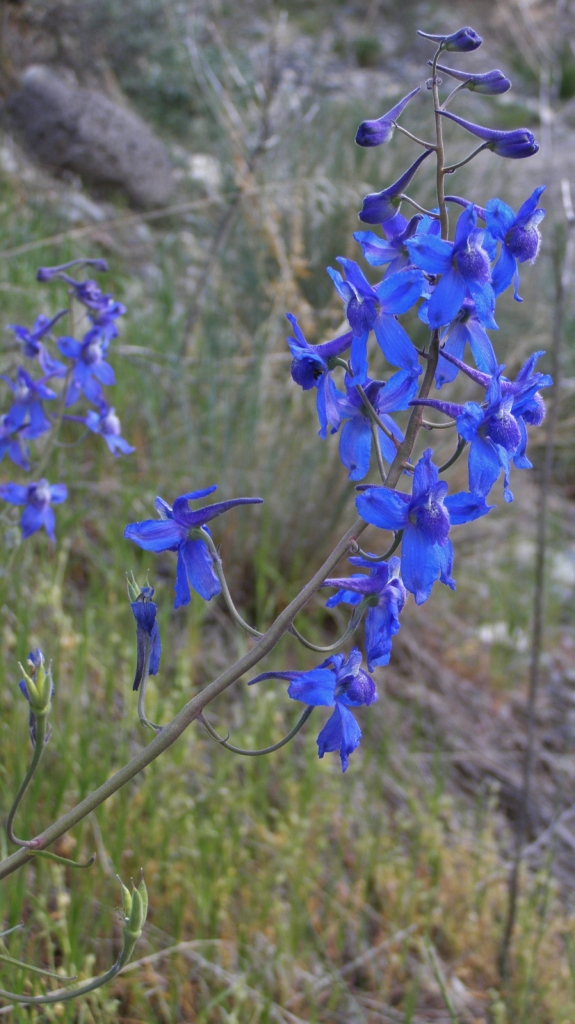
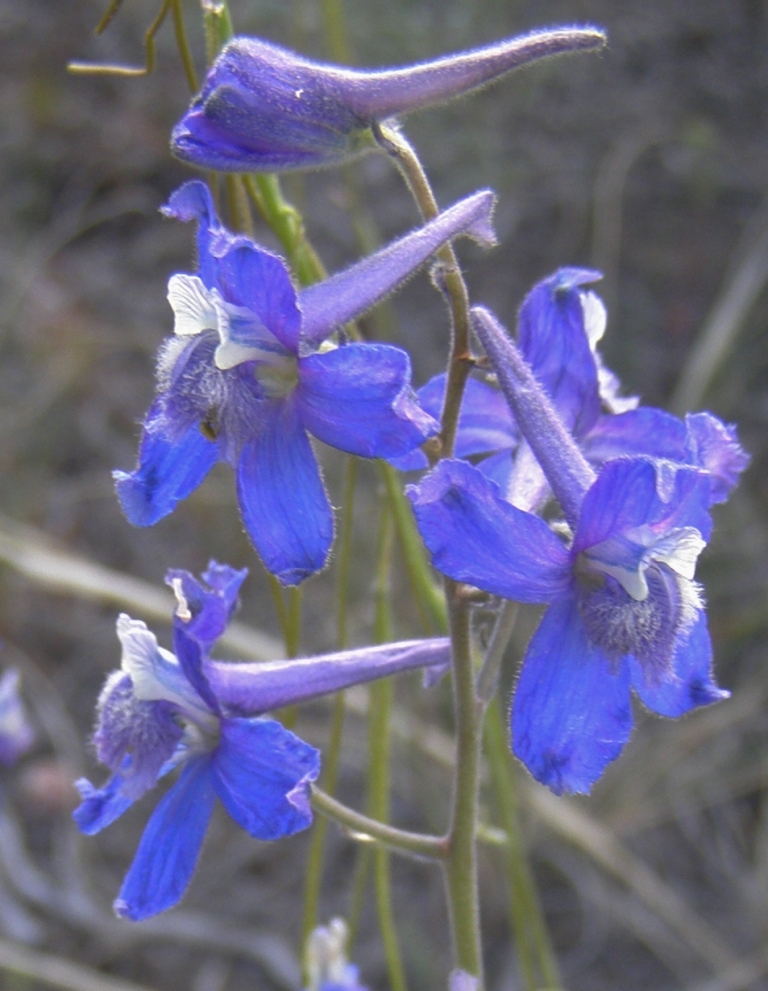
This and following photos were all taken in the same area of the Chilcotin, at Farwell Canyon. Note the variability of the flowers even within this small population. May 13, 2010.

This and following photos were all taken in the same area of the Chilcotin, at Farwell Canyon. Note the variability of the flowers even within this small population. May 13, 2010.

???????????????????????????????

???????????????????????????????

Hooked spurs and contrasting “bee” petals are nicely portrayed here. Some individuals are also intricately veined with bright violet – as in the first photo at the top of this post – which is the inspiration of the species name, “bicolor”.

???????????????????????????????

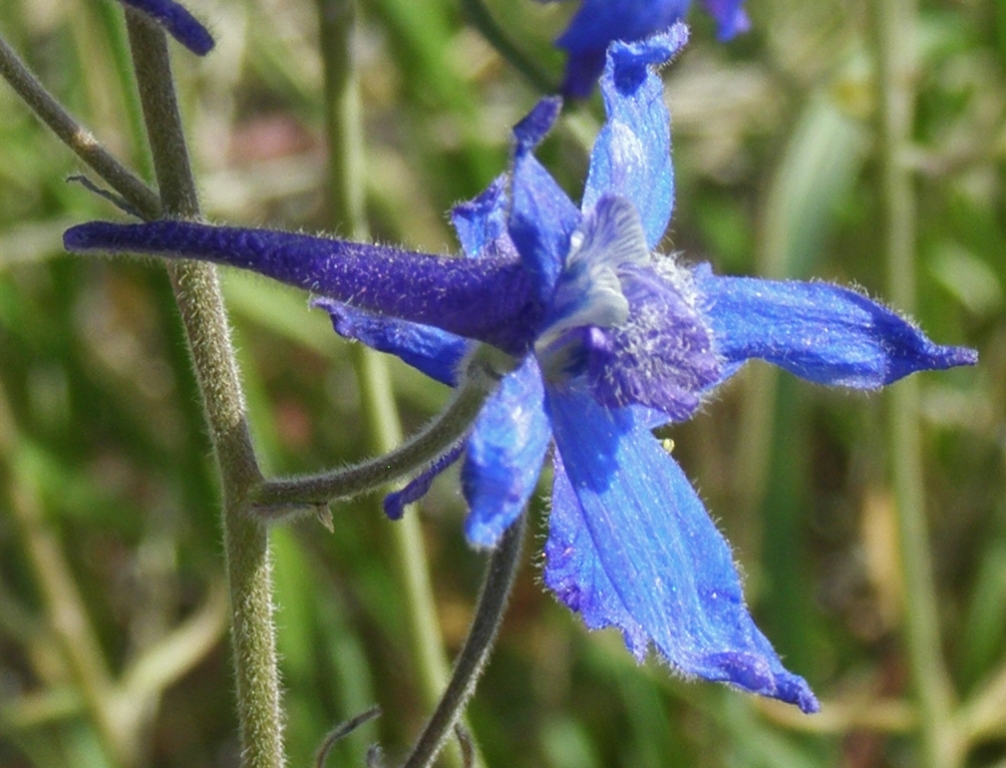
The entire plant is finely pubescent, with the central “bees” being prominently hairy. Note the long spurs, which are often hooked. The nectary is so deep and narrow that only certain insects – most notable butterflies and native bumblebees – are able to access the nectar.

Read Full Post »

« Newer Posts - Older Posts »