Archive for April, 2014

Spring's first flowers - Sagebrush Buttercups on the Hill Farm hillside, April 16, 2014.

Spring’s first flowers – Sagebrush Buttercups on the Hill Farm hillside, April 16, 2014. Image: HFN

Perennial. Zone 2. Ranunculaceae. Western North America. Interior and subalpine regions of B.C. and Alberta and into Saskatchewan; in the U.S.A. south to New Mexico, and east to North and South Dakota and Nebraska.

As the snow recedes from our river-valley hillsides each spring we eagerly kneel on the snowmelt-soggy ground to check on the state of the sagebrush buttercups. First of the spring flowers by far, blooming as soon as late March, their opening signals the very beginning of the progression of other springtime markers – the first returning Canada geese; the first robins and bluebirds; the appearance of the pollen-dusted catkins of the poplar tress and then the cottonwoods; the first evocative smell of “green” after a spring rainfall; the first day the horses leave their hay piles untouched and instead nuzzle through last autumn’s rustling fallen foliage for those first elusive but oh-so-welcome blades of grass…

We’ve made it through another cold time, for look, here are the buttercups again!

This is a tiny creature, but its cheerful blossoms shine like the sun, and a flourishing colony in full bloom is an amazing sight in late April and early May.

The specific name glaberrimus means “smoothest”, and refers to the foliage: freshly green, gently lobed, and slightly succulent. Purple-flushed flower buds appear on short stems which lengthen as the flowers open to a height of perhaps six inches at the utmost; most are only three or four inches tall. Five-petalled buttercups are typical of their race, being reflectively shiny as to petal surface, with a ring of thick yellow anthers surrounding the protruding cluster of pistils – potential achenes which will mature into ripe seeds in May and June.

Clusters of shallowly anchored, thickened, semi-tuberous roots provide the stored energy for R. glaberrimus‘s early spring flourishing; plants remain green through the entire growing season, and an investigation in autumn reveals the next spring’s buds already formed in the leaf axils at the base of the foliage; ready for emergence after a winter dormancy under the snow.

Enjoy this buttercup on your spring rambles; it is locally abundant throughout the Cariboo-Chilcotin, especially along roadsides through the Fraser River valley’s Douglas fir belt, and in the grasslands around Williams Lake.

Though I have never been tempted to bring this pretty wildflower into my own garden – it is happily abundant on the grassy hillsides of our farm and makes an ideal excuse for many springtime excursions to check on the progression of the colonies’ blooming – I have seen it established in a number of alpine gardens where it thrives generously, for it appears to be a healthy and adaptable plant.

Full sun suits Ranunculus glaberrimus best if its natural habitat is any indication, and it is very drought tolerant once established, though it appreciates springtime moisture.
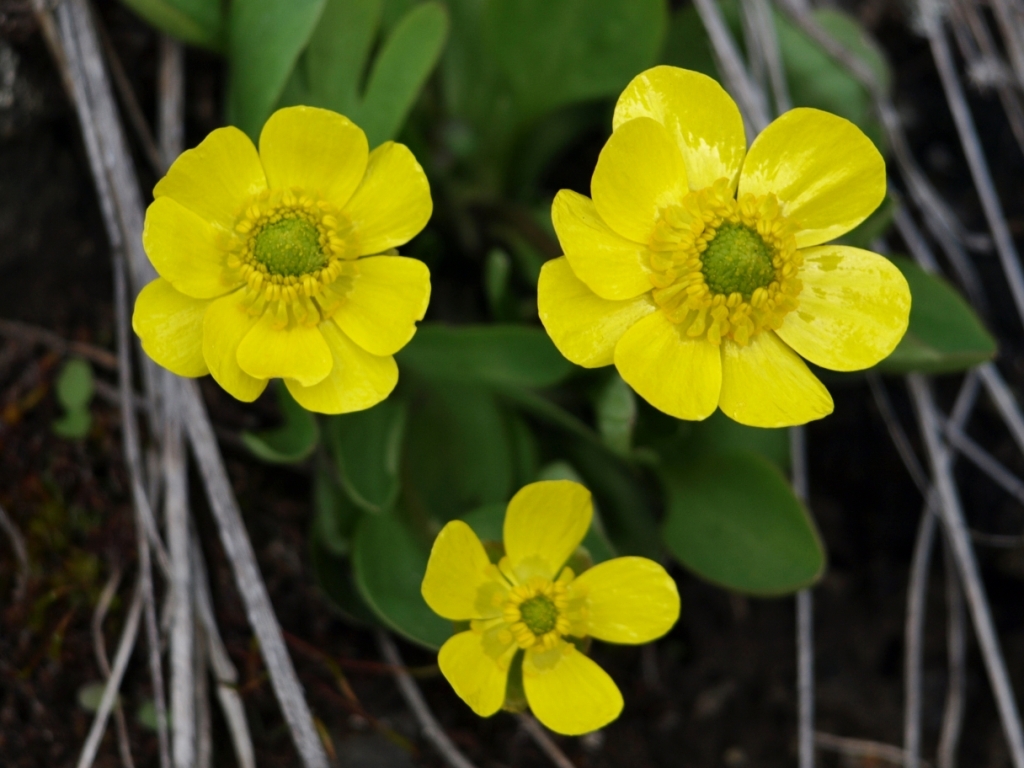
Though technically Ranunculus glaberrimus has five petals, some populations show a tendency to producing extras, doubling or tripling the modest prototype.

Though technically Ranunculus glaberrimus has five petals, some populations show a tendency to producing extras, doubling or even tripling the modest prototype. Image: HFN

???????????????????????????????

Image: HFN


Read Full Post »


???????????????????????????????

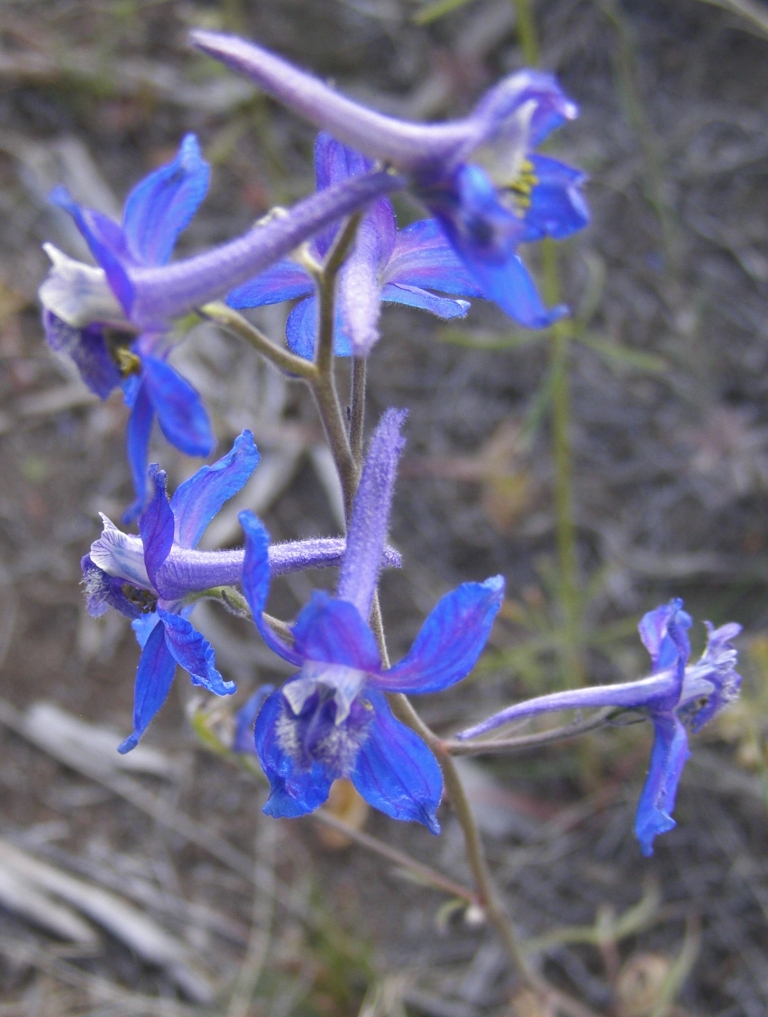
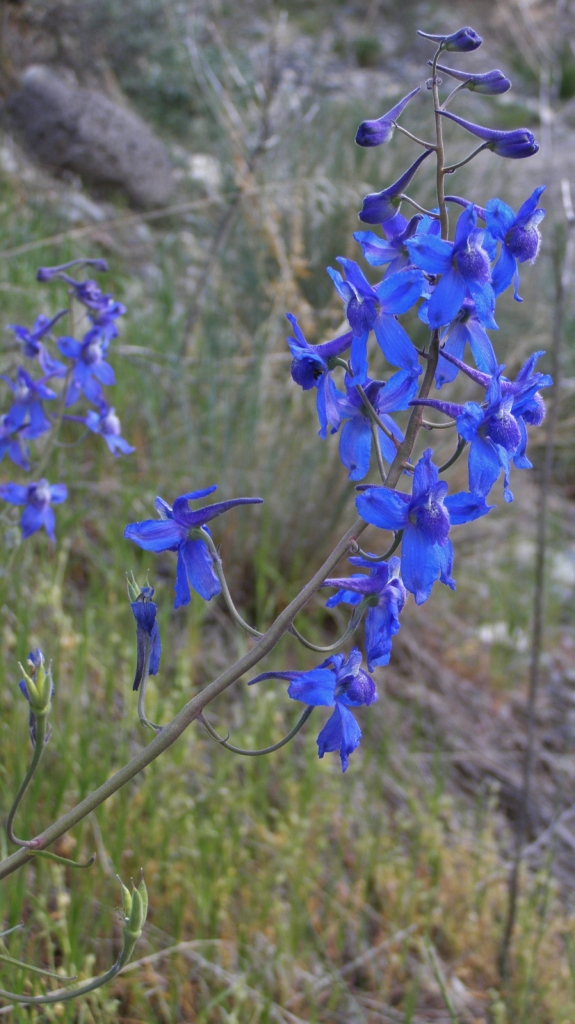
Low Larkspur growing on grassy dry sidehills along the Chilcotin River at Farwell Canyon, near Riske Creek, B.C., May 13, 2010. Note contrasting violet veining on the cobalt blue petals.

Perennial. Zone 2. Ranunculaceae. Western North America, from California north to southern third of British Columbia, and eastwards to southern Sakatchewan, South Dakota and Wyoming. Abundant in areas of the eastern Rocky Mountain foothills.  A widely variable species, from alpine forms only a few inches tall to grassland individuals reaching 18″ or taller, D. bicolor is now sometimes classified as D. nuttallianum, with regional subspecies.

This low-growing spring-blooming flower is frequently found on the dry hillsides and grasslands of the Cariboo-Chilcotin, especially along the Fraser River corridor in the dryland fir and sagebrush belt. Though a close relative of the tall garden delphiniums and larkspurs, as flower form and colour show, this is a much more petite thing, growing from 6″ to 18″ or so in height, and blooming briefly in April and May.

Lewis J. Clark calls it

…A small but showy species, inhabiting Bunch-grass and Ponderosa Pine country from Osoyoos to the Rockies.

At Macalister, just south of Quesnel on the Fraser River, we are at the northern limit of its grassland range, though variant populations have been reported in subalpine regions northwest of Prince George.

Low Larkspur is a tuberous rooted plant, which frequently behaves like a summer ephemeral. Slender bloom stalks appear in earliest spring, the flowers expand and are pollinated by butterflies and long-proboscissed bumblebees, and the finely divided foliage then withers on the stems, with the plant fading away into the surrounding vegetation, leaving clusters of innocuous yellow seed capsules in place of the cobalt and purple-blue blossoms.

On our own dry and rocky Fraser River hillside, this lovely larkspur blooms in early May alongside golden Arnica, creamy Heuchera cylindrica, sulphur-yellow Lithopspermum ruderale, and rosy-flowered Geum triflorum – a rewarding palette of contrasting wild colour for the springtime rambler to enjoy.

Despite its great beauty there is a sinister side to this gorgeous flower. In its spring growth phase, D. bicolor (and, incidentally, all of its relatives) is highly toxic to cattle. Because its foliage turns green before many of the rangeland grasses, browsing cattle sometimes seek it out, and there are numerous well-documented cases of mass bovine fatalities in regions where wild larkspur is abundant. By seed stage the toxicity has greatly abated; in our region this generally coincides with range turnout, and I am not personally familiar with toxicity episodes in the Cariboo-Chilcotin, though when I was working on a ranch in the Alberta foothills it was a very real concern for local cattlemen during spring turnout. Interestingly enough, the toxic effect seems specific only to cattle; sheep and wild browsers appear to be unaffected, and sheep have been used to eliminate the plant in some areas where bovine larkspur poisonings are of particular concern.

Low Larkspur moves happily into the cultivated garden, but with its delicate habit and summer dormancy it is best planted in an alpine bed, or among grasses, where conditions mimic those found in its natural habitat. I do not generally condone transplanting of wildflowers into the garden, but the collection of a modest quantity of mature seed in midsummer – being sure to scatter some about; never collect the entire contents of a plant’s seed capsules – should in no way impact our local populations. Sow immediately, preferably in a nursery bed, and look for seedlings the following spring, as many of the Ranunculaceae family (of which D. bicolor is a member) require a winter stratification period to trigger germination.

Sun; average conditions; tolerates summer drought.

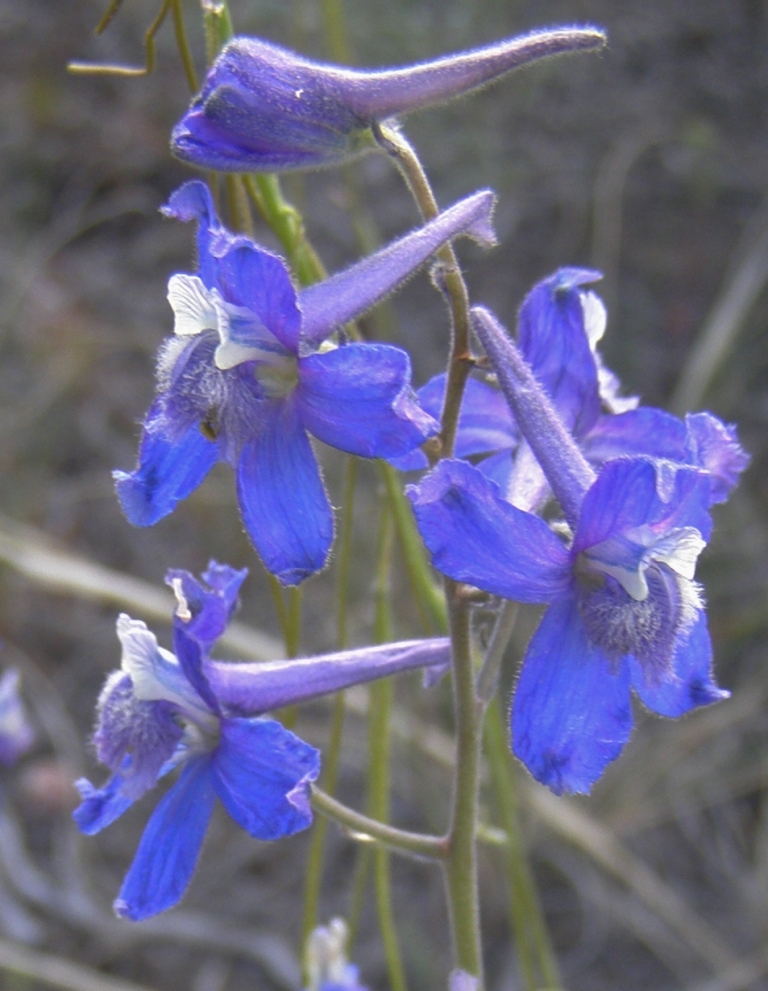
This and following photos were all taken in the same area of the Chilcotin, at Farwell Canyon. Note the variability of the flowers even within this small population. May 13, 2010.

This and following photos were all taken in the same area of the Chilcotin, at Farwell Canyon. Note the variability of the flowers even within this small population. May 13, 2010.

???????????????????????????????

???????????????????????????????

Hooked spurs and contrasting “bee” petals are nicely portrayed here. Some individuals are also intricately veined with bright violet – as in the first photo at the top of this post – which is the inspiration of the species name, “bicolor”.

???????????????????????????????

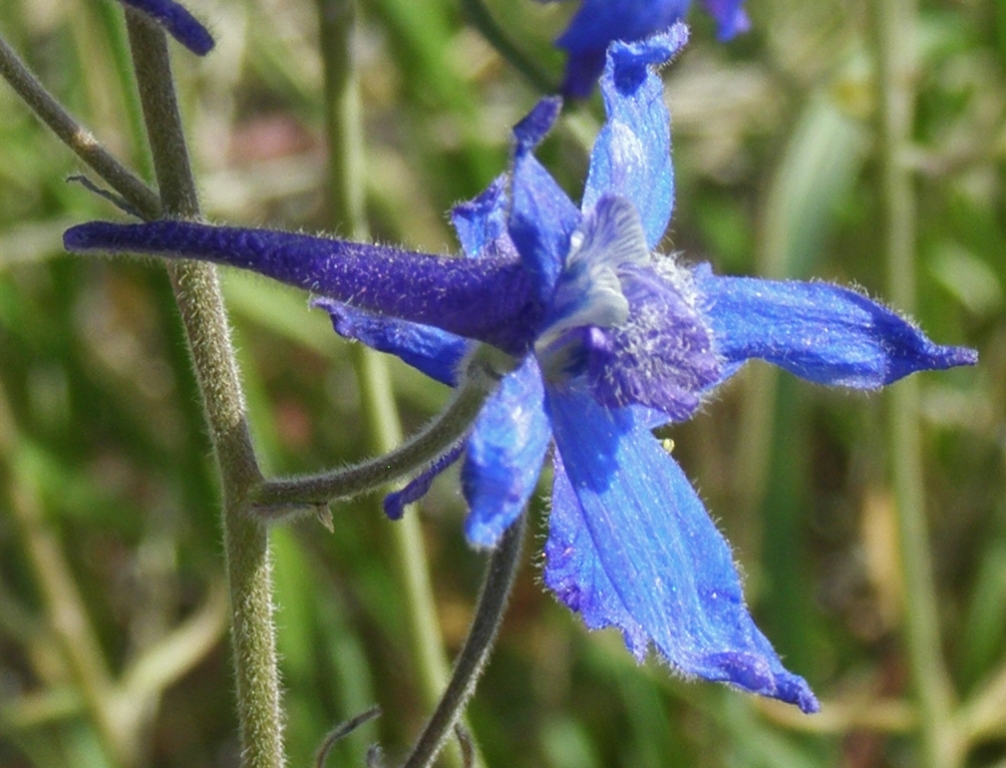
The entire plant is finely pubescent, with the central “bees” being prominently hairy. Note the long spurs, which are often hooked. The nectary is so deep and narrow that only certain insects – most notable butterflies and native bumblebees – are able to access the nectar.

Read Full Post »

Big-Leaf White Tansy at Hill Farm, July 2012.

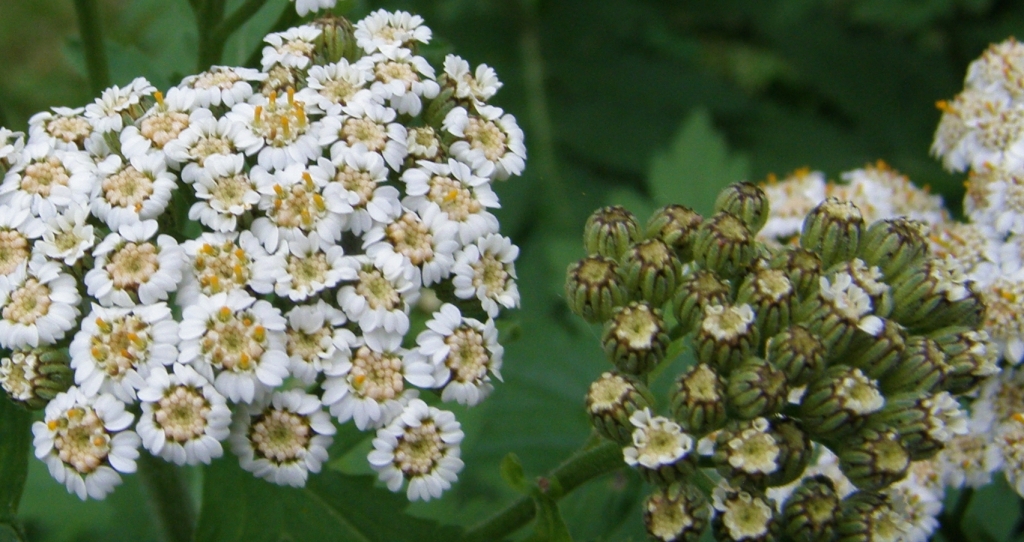
Tanacetum macrophyllum – Big-Leaf White Tansy at Hill Farm, July 2012. Image: HFN

Perennial. Zone 2. Asteraceae. (Formerly Compositae.) Syn. Chrysanthemum macrophyllum. Native from central and eastern Europe to southern Russia; the Carpathian Mountains south to Macedonia.

Grey-green, silky-textured, toothed leaves to 8 inches in length line 24 to 36 inch tall stems, which are topped by dense corymbes of ivory-white, yellow-stamened, yarrow-like flowers in June and July. Whole plant is pungently aromatic when touched.

Detail of flowers and bracted buds. Hill Farm, Macalister, B.C. - July 2011.

Tanacetum macrophyllum – Detail of flowers and bracted buds. Hill Farm, Macalister, B.C. – July 2011. Image: HFN

Detail of ray-and-disk composite flowers. Note small pollinator, mid-right. July 2011.

Detail of ray-and-disk composite flowers. Note small pollinator, mid-right. July 2011. Image: HFN

I recently came upon an interesting ethnobotanical report from Albania which reports that there is a traditional herbal use for Tanacetum macrophyllum. On St. George’s Day, May 6 – one of the most important rural religious festivals which is focussed around taking the flocks of sheep and goats to their summer pastures – this tansy in combination with nettles is rubbed on the goats’ udders in order to increase milk production. Also on St. George’s Day, a close relative, Tanacetum vulgare – Common Tansy, which we know as an introduced European species whose bright yellow button flowers are a common summer sight along rural Cariboo roadsides – is hung in Albanian and Macedonian stables and on butter churns as a good luck charm for abundant milk production.

Tanacetum macrophyllum has also been used to produce an essential oil which is being researched for its effectiveness as an antibacterial and antinflammatory.

If one doesn’t have a dairy goat around, or ambitions to pursue herbal medicine, one can still enjoy Big-Leaf Tansy in the garden. The early foliage is very lovely, being curled and frond-like with contrasting pale undersides, and the flower clusters quietly handsome in bloom. The bloom corymbs turn a mellow shade of greyish-brown as the florets fade; these can be clipped off for tidiness or allowed to remain on the plants, as they are not at all obtrusive.

Big-Leaf White Tansy forms a substantial clump in a year or two, reaching 2 feet in diameter and  3 to 4 feet in height. It is healthily vigorous but generally well-mannered. You may occasionally find a few seedlings, but they are easy to trowel out. Mature plants may be divided, the woody centers cut away, and the younger sections replanted.

This plant is good in mid-border as a contrast plant to showier-flowered things, and in the herb or wildflower garden.

Content in sun to light shade, and very happy with average garden conditions. The richer the soil the lusher it grows, but it is adaptable and can be quite drought tolerant if need be.

???????????????????????????????

Tanacetum macrophyllum – a look at the rather attractive foliage. Image: HFN


Read Full Post »

Perennial Cornflower blooming in late May, 2014 around the ruined foundation of an old ranch house near Roberts Lake.

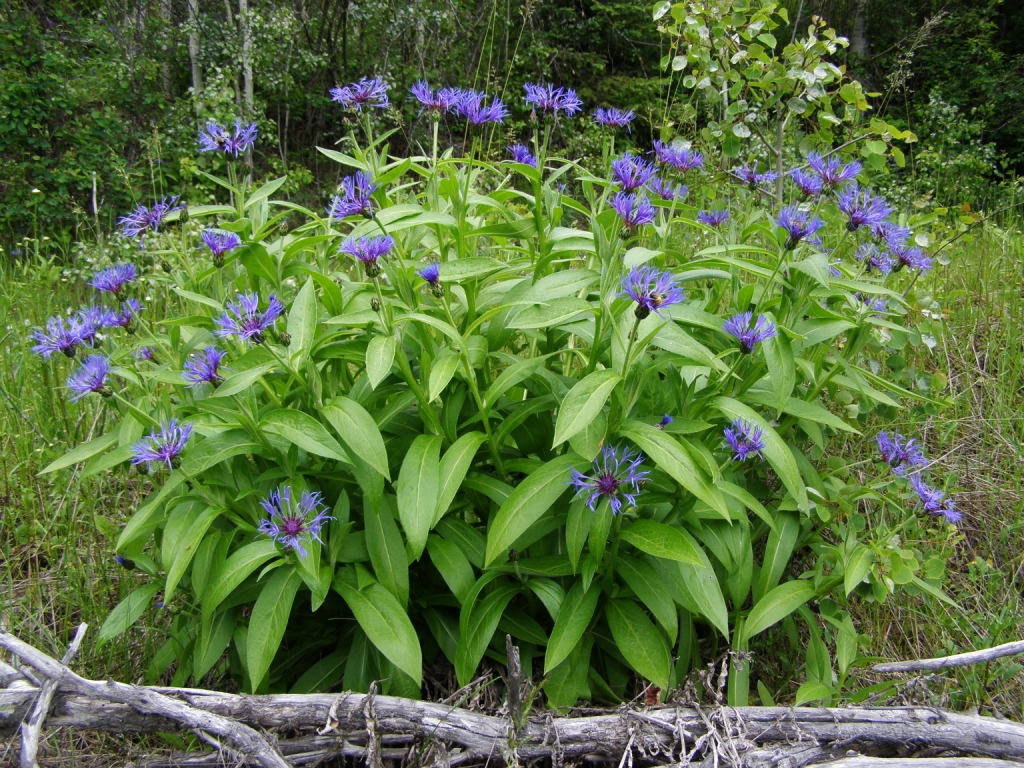
Centaurea montana – Perennial Cornflower blooming in late May, 2014 around the ruined foundation of an old ranch house near Roberts Lake, northeast of Williams Lake, B.C. Obviously a relic of a one-time cherished garden, for nestled in the grass growing over the tumbled foundation stones we also found creeping sedums and a solitary Dianthus deltoides (Maiden Pink), as well as the ubiquitous rhubarb plants and a few straggly lilacs. Image: HFN

Perennial. Zone 2.  Asteraceae. Europe, “from the Ardennes in Belgium south to the Pyrenees in Spain and east to Poland and Yugoslavia, growing in subalpine meadows and open woods, flowering in May-July”, according to the reliable Roger Phillips and Martyn Rix, in their two-volume masterwork, The Random House Book of Perennials.

This is a clump former which spreads to 2 feet or so in diameter where happy, depending on stoloniferous underground stems to slowly expand its girth every year. Though not exactly shy about advancing on its garden neighbours, it is easy to keep in check in the garden by some judicious trowel work in the spring.

Deep green, silky-haired, broadly lanceolate leaves alternate up the multiple sturdy stems, which are topped by numerous black-bracted buds. These open into large, electric blue cornflowers in late May, and continue well into July.

Some years the plants may “bird’s nest” in heavy rainfall. If this happens, ruthlessly shear the whole plant back to 6 inches or so, and tactfully ignore it for a week or two; it will quickly recover and regrow into a much more tidy clump, and will usually rebloom later in the season.

An excellent bee plant and attractive to numerous species of butterflies.

Esteemed Ontario gardener Patrick Lima, in his 1987 book The Harrowsmith Perennial Garden, has this to say about the Mountain Bluet:

Early in June…and for almost a month, 2½ foot stems rise up, carrying the many dark blue thin-petalled blossoms that always remind me of little jets of flame.

Perennial cornflowers look best set in groups of three or more – a single plant makes little show – just back of front [in the border] in company with poppies, irises of any colour, dianthus and the like…They might be left out of smaller garden in favour of something showier…but are a good choice for next-to-no-maintenance flowerbeds that could include Siberian irises and daylilies.

Although they are not spectacular, perennial cornflowers are practically indestructible; A. Clutton-Brock says in Studies in Gardening (1916) that if the hardy cornflower “were not so easy, it would be prized, and it deserves to be more prized for its easiness.”

There is a white mutation of the common blue variety, ‘Alba’, which is very pretty, and a number of recent hybrids, of which the purple-centered, white-petalled ‘Amethyst in Snow’ shows great promise in my garden. There is also a golden-leaved, blue-flowered form, ‘Gold Bullion’, which looks rather interesting. These last two are patented hybrids from the venerable Blooms of Bressingham in England, and are often found in the “premium perennials” section of our better nurseries. (Try Richbar Nursery in Quesnel, and Art Knapp’s in Prince George.)

Flower bud detail showing the distinctive bracts. The Centaureas are also known as "Knapweed", and the highly invasive range Diffuse and Spotted knapweeds, Centaurea diffusa and Centaurea biebersteinii, are serious rangeland invaders, being highly unpalatable to grazers and browsers both wild and tame. We pulled some knapweed last year which appeared on the side of the railroad tracks which pass through Hill Farm, and the plants left a bitter residue on our hands even through our leather gloves, which took several days to completely subside despite numerous scrubbings. Our garden denizen Centaurea montana does not appear to be quite as unpalatable, but keep an eye on it and confine it to your garden, just to be on the safe side.

Flower bud detail showing the distinctive bracts. The Centaureas are also known as “Knapweeds” due to these overlapping bracts, and the highly invasive Diffuse and Spotted knapweeds, Centaurea diffusa and C. biebersteinii, are serious rangeland invaders, being completely unpalatable to grazers and browsers both wild and tame. We pulled some knapweed last year which appeared on the side of the railroad tracks which pass through Hill Farm, and the plants left a bitter residue on our hands even through our leather gloves, which took several days to completely subside despite numerous scrubbings. Our garden denizen C. montana does not appear to be quite as unpalatable – I have seen sheep eat it with great relish – but keep an eye on it regardless and confine it sternly to your garden, just to be on the safe side. Image: HFN

This Centaurea will be very familiar to those who garden in the Quesnel and Prince George regions, as it thrives in the cool, moist subclimates of the aspen-forested areas, and in some places has escaped gardens to form thriving naturalized colonies along road edges and in ditches, where it is very lovely in its long bloom season. There are some handsome specimens growing in Wells-Barkerville area gardens, and it grows up on the hillside behind the Barkerville Heritage Site buildings, where it coexists quite nicely with native lupines, Indian paintbrush (Castilleja), arnica and wild valerian.

The invasive plant people are keeping an eye on it, being concerned that it might some day become a pest, but I am not overly worried about it, as it has been grown in our region for well over a century, and its “naturalization” appears to be confined to areas of disturbed soil, or places where there have been previous gardens. In my own microclimate it has in fact proved rather difficult, apparently not caring much for my clay soil and sun-baked summers.

Sun to light shade; average soil and moisture. Very long-lived.

Naturalized at the site of an old garden, near Roberts Lake, B.C.

Naturalized at the gone-to-bush site of an old garden, near Roberts Lake, B.C. Image: HFN

Read Full Post »

Eryngium planum 'Blue Cap" - thriving in less than ideal conditions at the 108 Heritage Site, Lac La Hache. We planted the raised perennial beds at the rest stop over 10 years ago with "tough, no-maintainence" plants, and it is quite interesting to see what has survived and, in some cases, thrived. This sea holly and Achillea filipendulina, Salvia nemerosa, Lychnis coronaria and Silene maritime, a goodly number of columbines, Erigeron 'Pink Jewel' and various sedums are hanging right in there. Exposed site, no supplementary water or fertilizer, and lots of traffic back and forth - we're pretty happy with how this planting has held up.

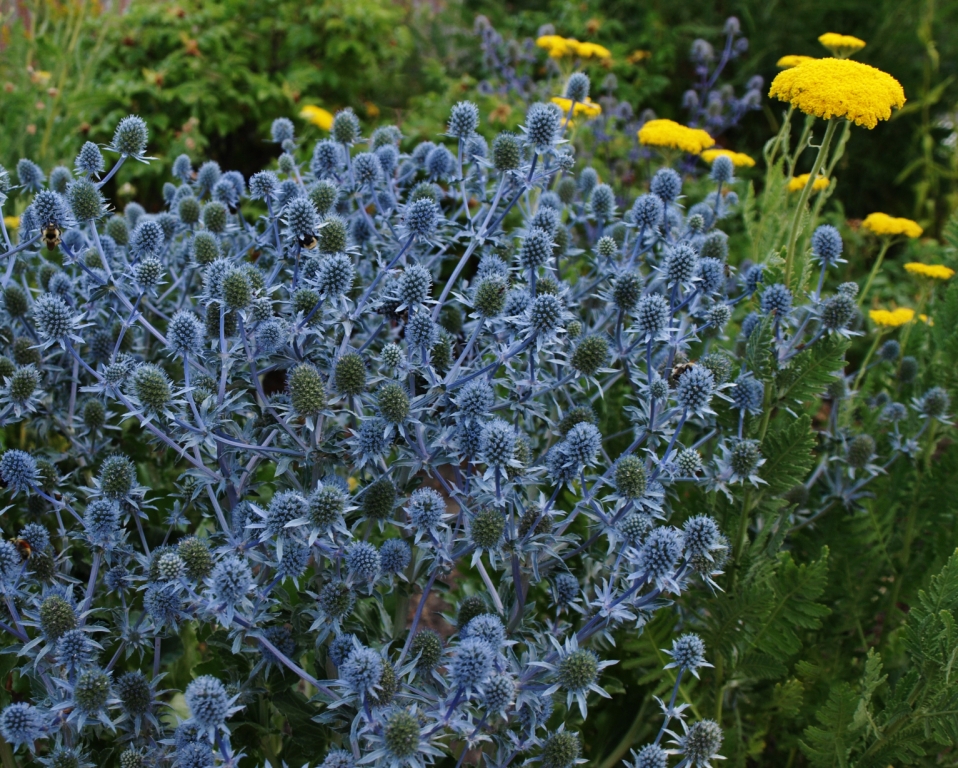
Eryngium planum ‘Blue Cap” – thriving in less than ideal conditions at the 108 Roadhouse Heritage Site, Lac La Hache. We planted the raised perennial beds at the rest stop there over 10 years ago with “tough, no-maintainence” plants, and it is quite interesting to see what has survived and, in most cases, thrived. This sea holly and Achillea filipendulina, Salvia nemerosa, Lychnis coronaria and Silene maritima, a goodly number of columbines, Erigeron ‘Pink Jewel’ and various sedums are hanging right in there. Exposed site, no supplementary water or fertilizer, and lots of traffic back and forth – we’re pretty happy with how this planting has held up. Photo taken in the late evening while stopping by for a quick break to stretch our road-trip weary legs, mid-August, 2012. Image: HFN

Perennial. Zone 2. Apiaceae. Central Europe, from Germany and Austria eastward to Russia; throughout the Caucasus Mountain region and into central Asia, where it grows happily in grassy meadows and on rocky, sun-baked hillsides.

I’ve been a die-hard fan of the sea hollies in general and this species in particular ever since my mother planted one out on her difficult-ground shale hillside north of Williams Lake over four decades ago. It self seeded about, and made a thriving colony, and provided untold hundreds of sturdy bloom stems which ended up being dried and made into everlasting wreaths and arrangements which Mom then gave to friends and sold at various arts-and-crafts sales.

It really is as blue as it looks, and the stems carry that cobalt blush as well, almost as if the whole thing were dusted with spray paint by someone seeking to enhance things.

Leathery, silvery-green, rounded leaves in basal rosettes send up 18-24” tall multi-branched stems topped by loose clusters of bristly, bracted, cone-shaped flower heads summer through fall.  Stems and flowers are flushed a deep electric blue. A very long season of bloom through summer into autumn.

An excellent cutflower and everlasting. A popular bee and butterfly flower, always alive with insect activity.

‘Blue Cap’ – translated from ‘Blaukappe’ – is a premium German selection of the species, and is even more compact and floriferous (and darker blue) than its attractive ancestor. A number of other E. planum cultivars have appeared in recent years, such as the very dwarf ‘Blue Hobbit’, and white forms such as ‘Silver Salentino’ and ‘White Glitter’.

A variegated form, ‘Jade Frost’, with pink-blushed, white-edged foliage, has been appearing in garden centres for a few years; I have a small planting of this cultivar and am at this point not terribly impressed, as one of the original trio mysteriously withered and died, and the other two are less vigorous than I had hoped for from this generally reliable species.

Sun; any soil; drought tolerant. Fantastic xeriscape plant. A generous self-seeder, but not a “runner” – individual plants stay put, and are tap rooted and very long lived. Oh – and it is reasonably deer resistant, too!

???????????????????????????????

Definitely approved by bees! A late evening forager on ‘Blue Cap’ Sea Holly at the 108 Roadhouse Heritage Site at Lac La Hache, B.C., mid-August, 2012. Image: HFN

Read Full Post »

UBC Botanical Garden, Vancouver, B.C. April 8, 2014

Trachystemon orientalis – UBC Botanical Garden, Vancouver, B.C. April 8, 2014. Image: HFN

Perennial. Zone 4/5. Boraginaceae. Syn. Borago orientalis. Bulgaria, Turkey, northern Asia.

Something of a bio plant (“botanical interest only”) but one which I am intrigued by, having long had a strong affection for the members of the Boraginaceae as a whole.

Deep green, crisply wrinkled, rather bristly leaves arise in early spring, along with many 6-inch stems topped by loose spikes of many small, star-shaped blue blooms with curiously reflexed petals and prominent stamen clusters. A rich nectar source, the flowers are a favourite of foraging bees. Once the flowers subside in May, the foliage expands to form a dense colony of 18-inch long, bright green leaves, reminiscent of a colony of furry-leaved hostas.

Most literature dismisses Trachystemon orientalis as hardy only to Zone 6, but properly sited, in humus-rich soil in areas with reliable snow cover, this one is worth a try in our region’s Zone 4-ish woodland gardens.

From UBC Botanical Garden horticulturist Jackie Chambers, April 2, 2008:

A fine example of Trachystemon orientalis can be found in the David C. Lam Asian Garden here at UBC. The coarse-textured, heart-shaped leaves are bright green and reach 25-30cm long. However, it is the dainty blue flowers, currently in bloom, that are the most striking feature of this perennial groundcover.

The flowers are held on hairy, purple flower stalks of 15-30cm in height. Flower stalks emerge in early spring (March-April) before the leaves have reached full size. Individual flowers are about 1cm in diameter, and are hermaphroditic – meaning they have both staminate (pollen producing) and carpellate (ovule producing) structures. Stiff hairs and blue flowers are typical features of members of Boraginaceae.

Trachystemon is derived from the Greek trachys, meaning rough, and stemon, a stamen. The species name orientalis means eastern or from the orient, and is a reference to the native distribution of this species. Trachystemon orientalis is endemic to southeastern Europe and western Asia.

In Turkey, the plant is eaten as a vegetable, and has the common name aci hodan. The flowers, stems, young leaves and rhizome may all be cooked and eaten.

English common names include Abraham-Isaac-Jacob, and Eastern or Oriental borage.

From a horticulturist perspective, this plant is an extremely useful groundcover; while it prefers partly shaded woodland locations, it can tolerate full sun to shade, and a range of soil conditions. It even performs well in dry shade which is always a challenge for gardeners.

Trachystemon orientalis grows in forested and subalpine areas of its native lands, where it is collected in early spring as a much-loved delicacy. It is sold in the local farmers’ markets and prepared rather like spinach, though I would fervently hope that the overall bristly texture is subdued by cooking.

A gardener from Ankara, Turkey, shared this comment on an online garden forum I occasionally visit:

This plant is highly edible and grows in the Black Sea mountains in Turkey. Much like spinach it needs a very good soak and rinsing several times because of the bristles. It is a lovely food, stem and flowers included, when chopped and added to sautéed chopped onions then whisked eggs stirred in and allowed to cook through. Salt and pepper to taste.

It is a seasonal plant and not available except by foraging for it. (The common name in Turkey is) ‘Kaldirik’.

Grown as an ornamental in Great Britain since the 1860s, it was reportedly introduced to North American in the 1970s by renowned plantsman John Elsley, who has been instrumental in introducing many new-to-the-continent species and cultivars to the North American nursery trade.

Still very rare in the nursery trade in Canada. Reported to be easy from seed, so a good place to start would be the various alpine garden club seed exchanges, or keep an eye out if visiting a coastal specialty nursery. Hill Farm Nursery hopes to be able to offer this plant in the future. A test planting is in the ground as of fall 2014.

Read Full Post »

Achillea sibirica var. camptshatica 'Love Parade' - Williams Lake, B.C., July 2014.

Achillea sibirica var. camtschatica ‘Love Parade’ – Williams Lake, B.C., July 2014. Image: HFN

Perennial. Zone 2. Compositae. The species is from Russia’s Kamchatka Peninsula. This improved selection is of garden origin.

Ten years or so ago, this glowing description in England’s iconic (and rather chatty) Chiltern Seeds catalogue caught my attention:

We forecast a great future for this fine new hardy perennial both for enhancing your border or for supplying attractive cut flowers to decorate your home. Developed from a newly introduced botanical variety from Kamchatka – that peninsula in the far, far north-east of Russia (so far it makes Vladivostok seem close!) with a somewhat unlovely climate – with highly ornamental and unique bright green, leathery foliage composed of narrow, lance-shaped, saw-edged, vaguely fern-like leaves (quite unlike any others in the genus), it bears from June to September flat-topped heads of clusters of numerous large and lovely soft pink flowers with pale yellow stamens…

I proceeded to acquire and grow this interesting Yarrow, and while it wasn’t anything close to being a traffic stopper, it did have a quiet charm that turned me into a sincere admirer. I have grown it ever since.

Clusters of large – for an Achillea – pastel pink, pale yellow-centered flowers top sturdy 18-24” stems during a long bloom time, from June to September. The blooms are darkest when they first open, fading to a paler pink and eventually white as the clusters age. Good cutflower.

It makes a rather loose clump, and expands itself by short underground runners, but it is not at all uncontrollable, being easily nipped back if required. The saw-toothed foliage is a glossy deep green, rather fleshy and brittle, and attractive throughout the growing season.

‘Love Parade’ seems to have settled down into being something of a standard variety, which is generally a good recommendation of garden merit.

Sun to part shade; average soil. Very easy from seed, and can be divided once plants reach a large enough size to take splitting.

Read Full Post »

UBC Botanical Garden, Vancouver, B.C. April 8, 2014

UBC Botanical Garden, Vancouver, B.C. April 8, 2014 Image: HFN

Perennial. Zone 3. Araceae.  Western North America; California north to Alaska; throughout British Columbia from coastal regions to lower elevations of mountain ranges. 

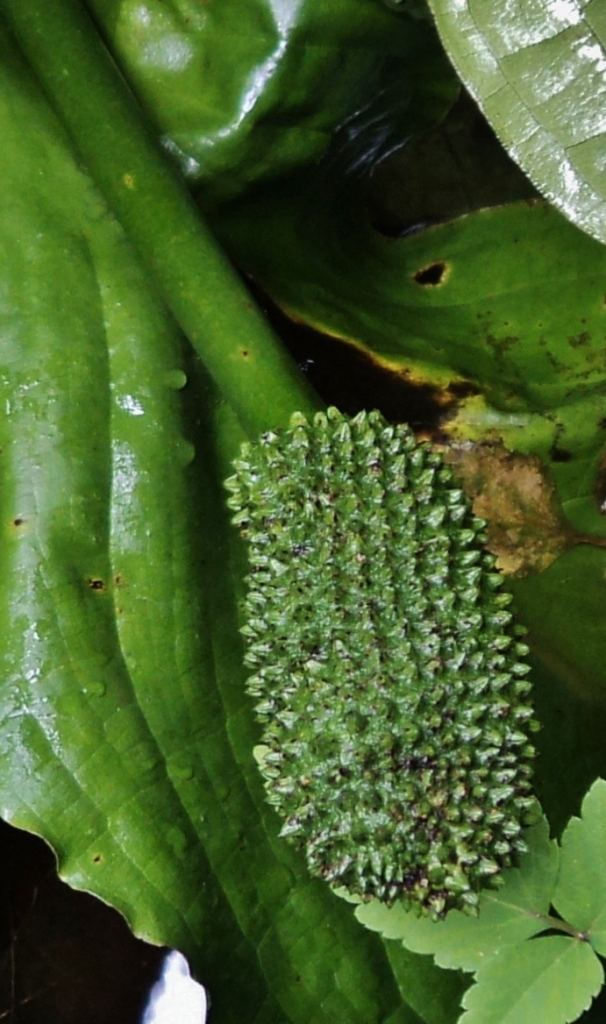
This spectacular native wildflower emerges from its winter hibernation before the snow is completely gone, appearing in wet and swampy areas in April and early May. Tight-packed green flower spikes are enclosed in a large, bright yellow bract. Pollinated by flies and beetles, which are attracted by the musky fragrance of the flowers. Club-shaped seed pods mature in late summer.

Foliage is strongly pungent when bruised, hence the common name. Massive, glossy, fleshy fleaves are 3 to 4 ft. tall.

Excellent for those with larger gardens, and adds early spring interest to the bog garden and pond edge. Prefers shade. A moisture lover, which demands wet feet to be happy. Fairly slow growing, but long-lived and maintenance free where happy.

Yellow Skunk Cabbage may be found in our in the wild in our area in wetter regions, generally where cedars thrive. Look for it in the bush around Likely and Horsefly, and in lower elevation wet areas in the Cariboo Mountains. Abundant in Wells Grey Park.

From Lewis J. Clark’s superb 1973 masterwork Wild Flowers of British Columbia:

The whole plant has a smell of spring, of surging growth, that would be objectionable in a closed room but is not unpleasant in its own habitat. For the record, it does not smell at all like the mephitic spray of the skunk. Bears consume the whole plant, including the short thick rootstock, while deer occasionally browse the leaves.

This huge plant is related to the taro, staple food of the Polynesians. Both plants produce a stinging sensation in the mouth, due to calcium oxalate. Ages ago, however, the natives in our area discovered, as did those of the South Seas, that roasting and drying the root drove off the substance responsible for the stinging, burning taste, after which it could be ground to an edible flour.

Fraser’s Thimble Farms on Saltspring Island is the only commercial source that I am aware of, but you may be able to acquire this by special order through local nurseries such as Richbar in Quesnel.

Lysichiton americanus has received the Royal Horticultural Society’s Award of Garden Merit.

UBC Botanical Garden, Vancouver, B.C. April 8, 2014.

UBC Botanical Garden, Vancouver, B.C. April 8, 2014. Image: HFN

UBC Botanical Garden, Vancouver, B.C. April 8, 2014

UBC Botanical Garden, Vancouver, B.C. April 8, 2014 Image:HFN

Mid-summer foliage. Wells Gray Park, north of Clearwater, B.C. July 20, 2011

Mid-summer foliage. Wells Gray Park, north of Clearwater, B.C. July 20, 2011 Image: HFN

Maturing seed pod. Wells Gray Park, north of Clearwater, B.C. July 20, 2011

Maturing seed pod. Wells Gray Park, north of Clearwater, B.C. July 20, 2011 Image: HFN

Read Full Post »

UBC Botanical Garden, Vancouver, B.C. April 8, 2014

UBC Botanical Garden, Vancouver, B.C. April 8, 2014 Image: HFN

Perennial. Zone 3. Araceae. Kamchatka Peninsula of northeastern Russia, Sakhalin and Kuril Islands, northern Japan.  Closely related to the native yellow-spathed Skunk Cabbage, Lysichiton americanus.

Very early blooming, emerging through the last of the snow and flowering from late April through May. Big white spathes with a central green spadix packed with tiny green flowers. Large, thick, shiny green leaves.

Pollinated by beetles and flies, which are attracted by the somewhat transient fragrance of the flowers. Foliage is musky-scented when bruised, hence the common name. Foliage clumps are 2 to 3 ft. tall.

A handsome species for the bog garden, edge of pond or stream, or wet woodland garden. Prefers shade. This one thrives in moist conditions, and will require some extra care to establish in Cariboo gardens, though it should prove fully hardy where happy, especially in areas where the native Skunk Cabbage already thrives. It is reported to hybridize with Lysichiton americanus; offspring will show cream coloured spathes which will be larger and more showy than both parents, according to botanical garden reports from England.

Of most interest in earliest spring into early summer, when the seed pods form and the foliage starts to get a bit tired. The “skunky” aroma is not particularly offensive, but it is noticeable when plants are disturbed.

Very rare in cultivation in our region; one for the serious collector. Fraser’s Thimble Farms on Saltspring Island is a good place to inquire if you are keen on giving this one a try. Slow growing, taking five years or so to reach full size, but long-lived and problem free once established.

Lysichiton camschatcensis has received the Royal Horticultural Society’s Award of Garden Merit.

Read Full Post »